Many people go to state fairs while they’re on vacation.
But the fair never takes a vacation.
When the rides are quiet and the midway is empty, the fairgrounds remain. They are maintained, governed, staffed, and waiting. Permanent buildings stand after the tents have folded and the crowds have gone home.
The fair itself is not a pop-up.
It’s an institution that has a season.
That permanence is easy to forget, because most of us encounter state fairs as moments rather than systems. A hot afternoon. A funnel cake. A prize-winning cow. A politician holding something on a stick that is alleged to be food.
We leave, and the fair recedes into memory until next year.
But the fair itself is perpetual.
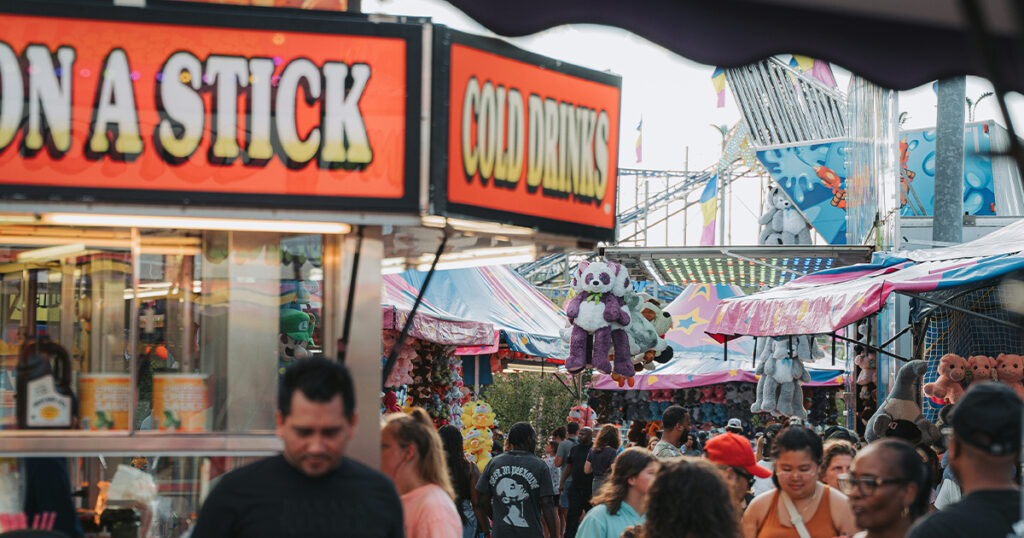
A state fair is like an iceberg.
What most people experience—the smells, the sounds, the colors—is only the visible tip: rides, food, and crowds.
Everything else sits below the waterline.
Beneath the surface is something much larger: months of planning, overlapping governing bodies, economic systems, and institutional memory—the accumulated know-how that allows the fair to function year after year without being reinvented.
Most of it remains invisible to the people walking the midway.
Culture
Other countries have large agricultural events and festivals.
But the American state fair is something more specific: agriculture, commerce, entertainment, and food operating together at scale as a single, recurring institution.
That’s why it shows up in culture the way it does.
Movies
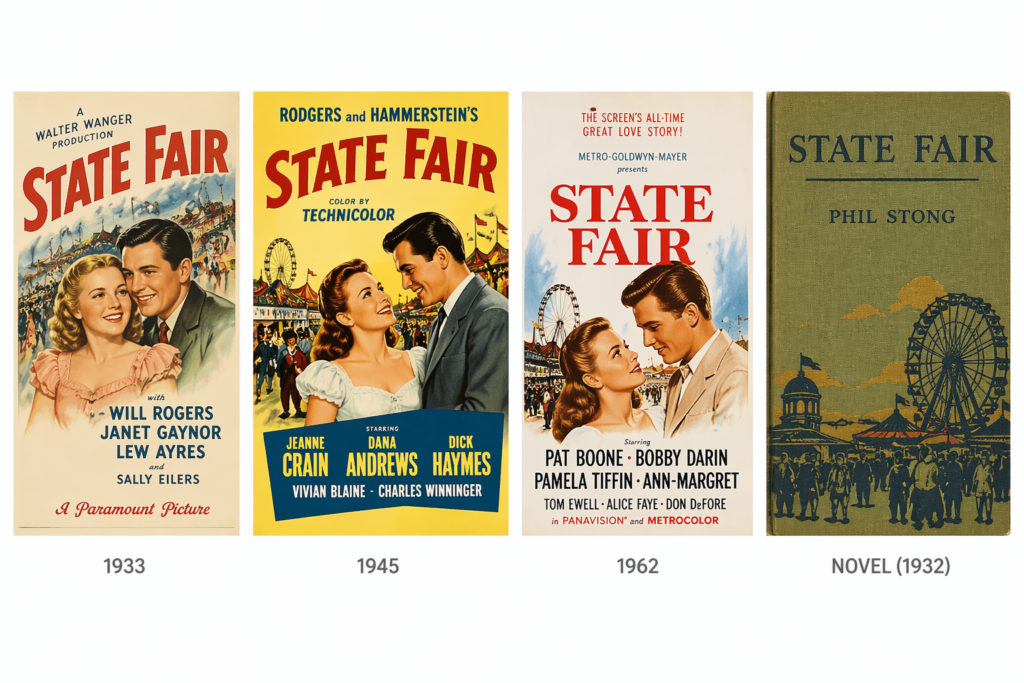
The movie State Fair (1933), based on the 1932 novel by Phil Stong, presents a world that feels stable and intact, even in the depths of the Great Depression. Neither the film nor the novel makes explicit reference to economic hardship. Instead, both assume the continuity of the fair as a recurring institution—planned, populated, and functioning as expected.
By 1945, Rodgers and Hammerstein had turned it into a musical. In 1962, State Fair was remade again, this time starring Pat Boone.
It is generally understood that the novel State Fair was based on the Iowa State Fair. Although the book never names it, Phil Stong was an Iowa native writing from direct experience. The film versions are even less specific, but they preserve the same Midwestern template—familiar enough to feel real, but general enough to stand in for fairs across the country.
Up close, it feels different. Louder. Denser. Less like a setting, more like something in motion.
Competitive Culinary and Craft
The fair isn’t just something people attend. It’s something they enter.
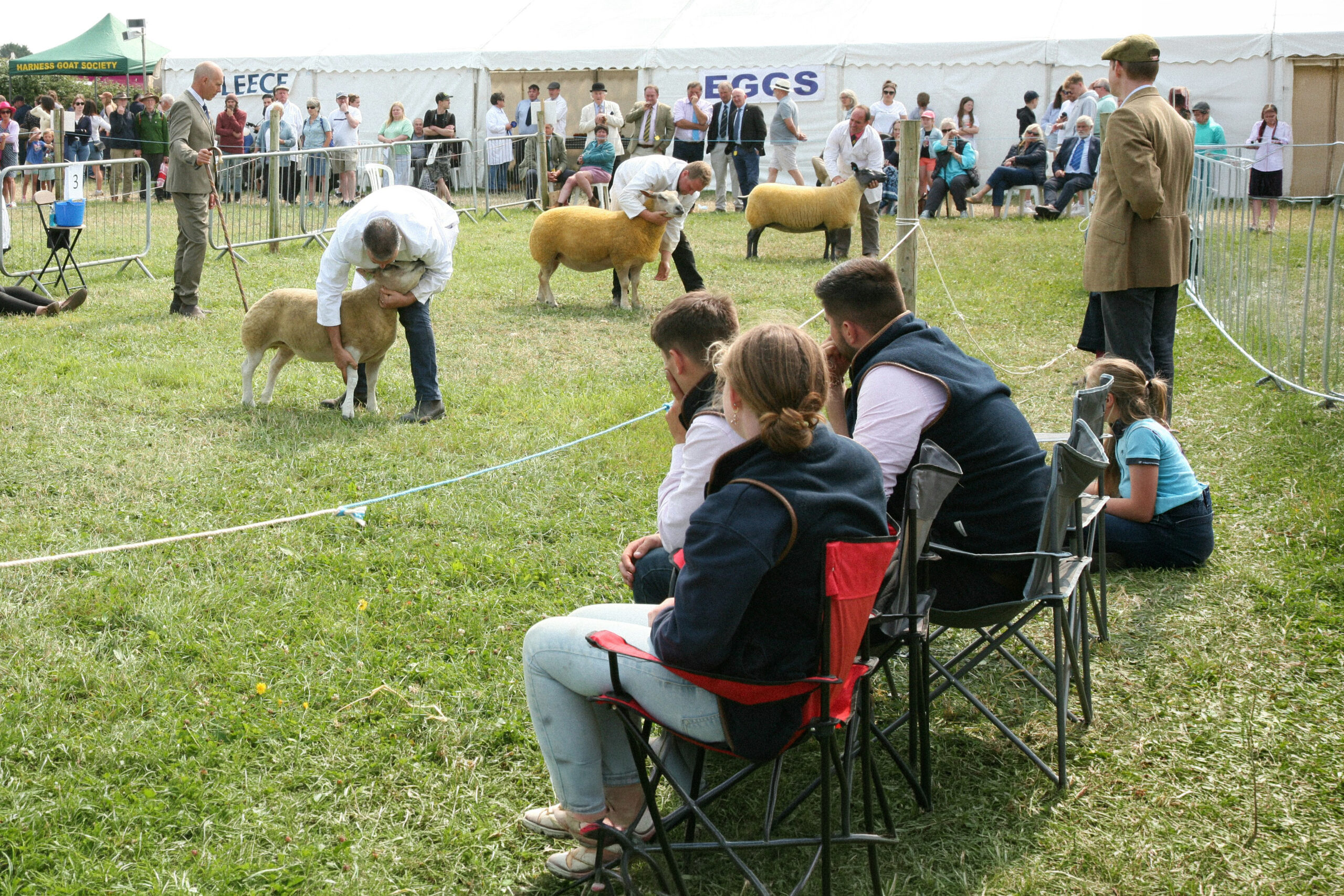
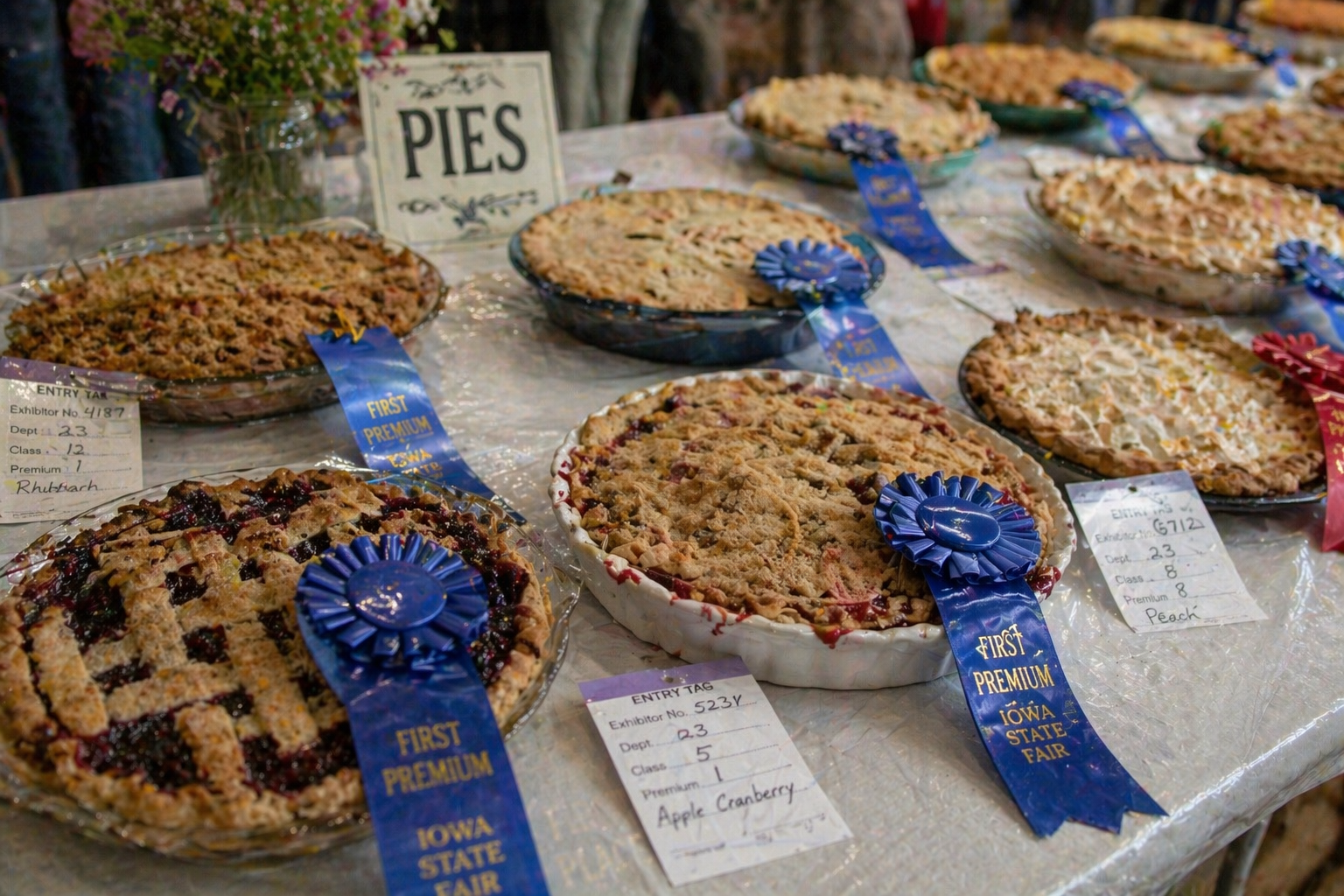
Competitions—culinary, agricultural, and craft—are built into its structure. People bring what they’ve made, what they’ve grown, what they’ve raised, and submit it to be judged. Ribbons are awarded. Standards are reinforced. The process repeats year after year.
Taken together, what happens every day in those small spaces is at least as integral to the fair as anything that happens in the stadium.
The game lasts a few hours. The booths—and the many other small spaces—operate all day, every day, for weeks at a time—feeding people, selling, exhibiting, competing, adjusting, and holding up under pressure from the elements and whatever else the day brings.
It takes the underlying logic of the state fair—permanence, spectacle, density—and turns the volume up.
The result feels less like an event you attend and more like a temporary city you enter.
.
If state fairs exist on a spectrum, Texas sits at the far end.
The State Fair of Texas doesn’t just scale up the familiar elements. It amplifies them.
Bigger grounds.
Longer duration.
Denser crowds.
More happening at once.
Texas isn’t an exception so much as an exaggeration.
At the center of the fairgrounds sits the Cotton Bowl, a stadium that holds more than 90,000 people and hosts the Texas–Oklahoma game, the fair’s marquee event.
Just outside it, in its shadow, the scale collapses—from tens of thousands of seats to small, self-contained spaces: 10×10 booths—the standard size, with some variation—alongside trailers and trucks. Hundreds of operations run at once, each one having to do everything at the same time.
Taken together, what happens every day in those small spaces is at least as integral to the fair as anything that happens in the stadium.
The game lasts a few hours. The booths—and the many other small spaces—operate all day, every day, for weeks at a time—feeding people, selling, exhibiting, competing, adjusting, and holding up under pressure from the elements and whatever else the day brings.
It takes the underlying logic of the state fair—permanence, spectacle, density—and turns the volume up.
The result feels less like an event you attend and more like a temporary city you enter.
.
The fair isn’t just something people attend. It’s something they enter.
Competitions—culinary, agricultural, and craft—are built into its structure. People bring what they’ve made, what they’ve grown, what they’ve raised, and submit it to be judged. Ribbons are awarded. Standards are reinforced. The process repeats year after year.
The competitive side of the fair isn’t limited to livestock or baking. Artists have been part of it as well. Grant Wood, best known for American Gothic, exhibited work at the Iowa State Fair and won a prize there—participating in the same system of entry, judging, and recognition as everyone else.
The fair doesn’t just display culture. It organizes it.
Food on a Stick
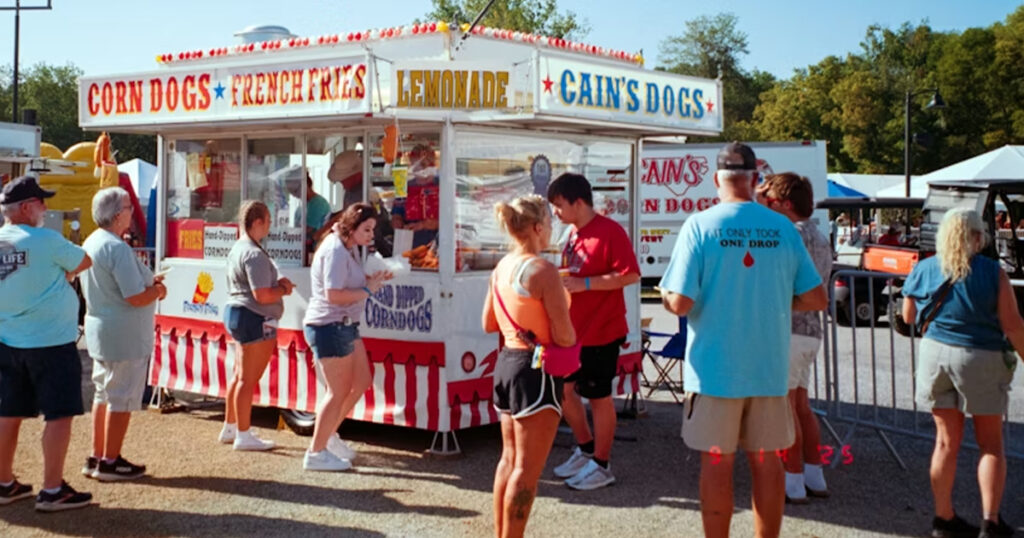
The fair is not a place anyone would go to get healthy.
But it’s also not just fried excess. Look a little closer and you’ll find stands turning out food that would hold up anywhere—even if it’s designed to be eaten standing up or on the move.
That constraint shapes everything.
Fair food is built for crowds in motion—contained, handheld, and consumed without stopping. “Food on a stick” isn’t novelty for its own sake so much as a practical response to scale, density, and flow. It allows thousands of people to eat without interrupting the movement of the fair.
Behind the spectacle is a system designed for volume: menus simplified, preparation standardized, and dishes adapted to heat, handling, and time.
At its best, fair food isn’t a gimmick. It’s competent cooking, engineered for a temporary city.
Other countries have large agricultural events and festivals.
But the American state fair is something more specific: agriculture, commerce, entertainment, and food operating together at scale as a single, recurring institution.
That’s why it shows up in culture the way it does.
The movie State Fair (1933), based on the 1932 novel by Phil Stong, presents a world that feels stable and intact, even in the depths of the Great Depression. Neither the film nor its source material makes explicit reference to economic hardship. Instead, both assume the continuity of the fair as a recurring institution—planned, populated, and functioning as expected.
By 1945, Rodgers and Hammerstein had turned it into a musical. And in 1962, Pat Boone appeared in a re-make of Sate Fair.
It is generally understood that the novel State Fair was based on the Iowa State Fair. Although the book makes no specific mention of Iowa, Phil Stong was an Iowa native who drew on his firsthand experience of the fair in writing it. The locales of the three film versions are even more vague, but they retain the same Midwestern template—familiar enough to feel specific, but general enough to stand in for state fairs across the country.
Grant Wood—better known today for American Gothic—exhibited work at the Iowa State Fair and won a prize there, entering the same system of judging and recognition as every other participant.
Politics as Ritual
State fairs also function as informal political stages.
Candidates don’t just speak—they perform normalcy.
They eat the food. Or pretend to.
They stand in the crowd.
They submit to the rules of the fair.
At one time, those images were sent out “on the wire.”
Now they’re uploaded instantly.
The ritual hasn’t changed.
.
Business and Scale
State fairs are big—not just in attendance, but in structure.
They have boards.
They have budgets.
They hold contracts that extend beyond a single season.
They employ year-round staff.
They negotiate with cities, utilities, insurers, vendors, unions, and sponsors. They plan years ahead.
This isn’t a traveling carnival passing through town.
It’s a professional operation. It’s a big business.
Taken together, state fairs represent a durable industry—one that generates enormous economic activity while operating on a seasonal clock.
Texas as the Extreme Case
If state fairs exist on a spectrum, Texas sits at the far end.
The State Fair of Texas doesn’t just scale up the familiar elements. It amplifies them.
Bigger grounds.
Longer duration.
Denser crowds.
More happening at once.
Texas isn’t an exception so much as an exaggeration. It takes the underlying logic of the state fair—permanence, spectacle, density—and turns the volume up.
Over its 24-day run, the State Fair of Texas draws more than two million visitors. It generates more than $600 million in regional economic activity. More than a thousand points of sale—food stands, booths, and vendors—operate across the fairgrounds at once.
At the center of the fairgrounds sits the Cotton Bowl, a stadium that holds more than 90,000 people and hosts the Texas–Oklahoma game, the fair’s marquee event.
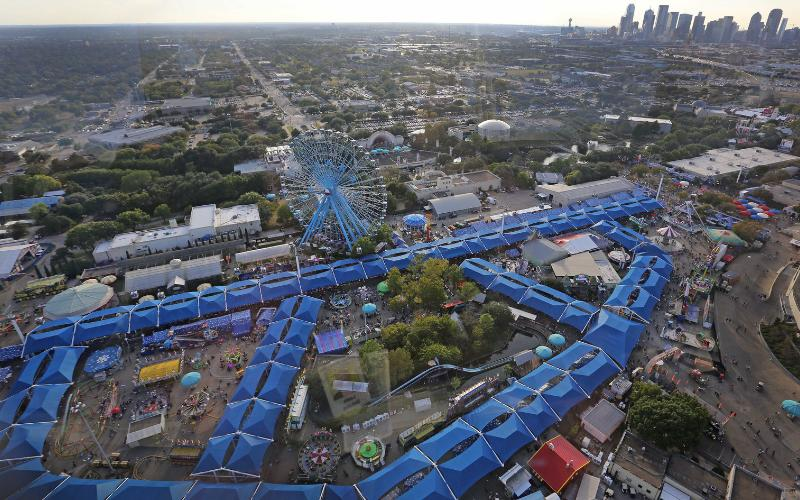
Just outside it, in its shadow, the scale collapses—from tens of thousands of seats to small, self-contained spaces: 10×10 booths—the standard size, with some variation—alongside trailers and trucks. Hundreds of operations run at once, each one having to do everything at once.
Taken together, what happens every day in those small spaces is at least as integral to the fair as anything that happens in the stadium.
The game lasts a few hours. The booths—and the many other small spaces—operate all day, every day, for weeks at a time—feeding people, selling, exhibiting, competing, adjusting, and holding up under pressure from the elements and whatever else the day brings.
The result feels less like an event you attend and more like a temporary city you enter.