Brick-and-mortar stores are showing up at fairs and festivals — and in many cases, out-boothing the original boothers. What that convergence reveals about how both formats are evolving.
“Real retailers” didn’t use to pay much attention to boothers — people they perceived as sellers of homemade preserves, baseball cards, and artwork made from discarded plumbing supplies from their tents. But that’s changing. Brick-and-mortar businesses now show up at fairs and festivals with regularity, often with setups more polished than the vendors who built the format. They’re not just present. In many cases, they’re winning.
At last year’s Rock & Ride in Ardmore, Pennsylvania, a large contingent of booths belonged to nearby restaurants — some located just a block or two from the event itself. They weren’t test-marketing a concept or chasing a new customer base. They were simply there — operating a second format, in public, steps from where they already operate a first one. The booth wasn’t a stepping stone. It was something else: a lighter, looser version of themselves, available for one afternoon to anyone who showed up.
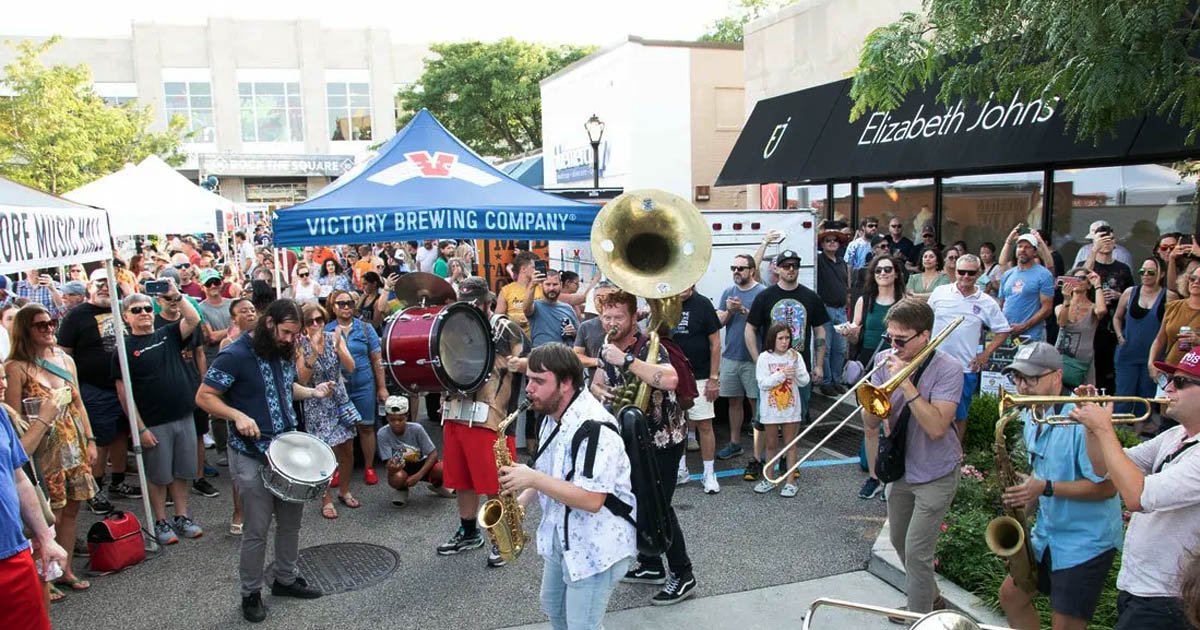
Meanwhile, many boothers — despite their mobility — are adopting business strategies that were once the exclusive province of brick-and-mortar businesses. Almost extinct are the old cash-only signs, as they accept credit cards as a matter of course. They’re collecting email addresses, building contact lists, and following up after the event is over. And a significant number of them are running what amounts to a storefront The booth is becoming just a part of their business.
The exchange that was once one-directional has reversed. And now it runs both ways.
Why Boothers Evolve Faster
A booth appears for hours or days. Then it gets packed away. Whatever worked gets rolled out again. Whatever didn’t work gets left behind. In that sense, booth operators have a huge advantage over traditional retail: every appearance can feel like a grand opening.
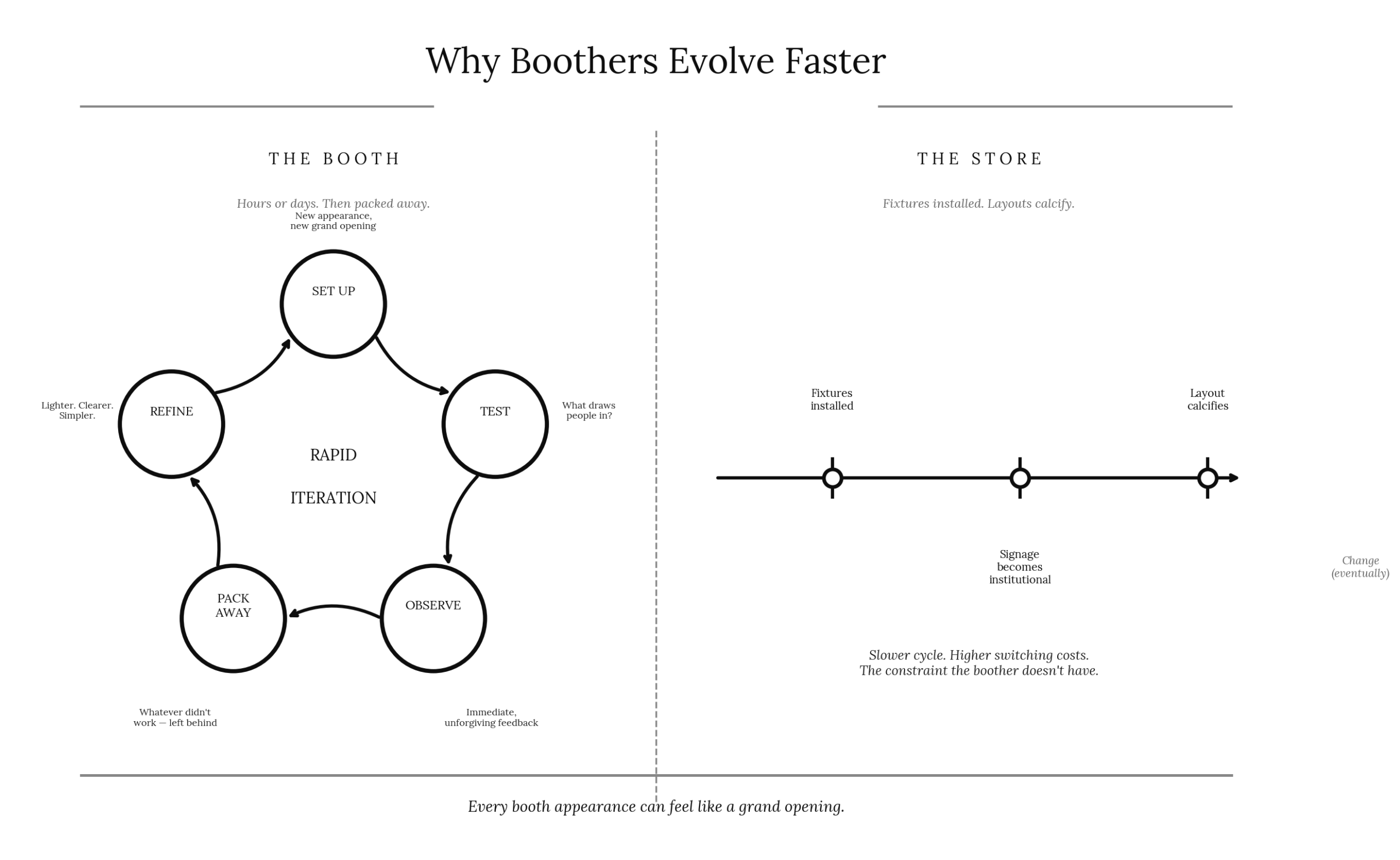
Over time, that pressure forces adaptation. Displays become lighter. Messages become clearer. Layouts become simpler. Anything that slows setup, blocks visibility, or confuses visitors tends not to survive long.
Successful boothers are constantly evolving — from month to month, week to week, day to day, sometimes within the same day.
This is not to say that brick-and-mortar stores don’t evolve. But their cycle is often slower. Fixtures get installed and stay. Signage becomes institutionalized. Layouts calcify. The boother doesn’t have that luxury — and the constraint becomes an advantage.
The Convergence
Successful boothers rarely invent merchandising from scratch. Many have borrowed techniques that conventional retail spent decades refining — clear sightlines, vertical presentation, disciplined product editing, branding that explains itself quickly. They took what worked and made it portable.
Brick-and-mortar stores are showing up at fairs and festivals — and in many cases, out-boothing the original boothers. What that convergence reveals about how both formats are evolving.
When those experienced retailers enter the event environment, they bring deep merchandising experience, operational discipline, and brand consistency. What’s emerging is a convergence: boothers borrowing from retail, retailers becoming more present at events that were once the sole domain of weekend vendors.
The Modern Booth Business
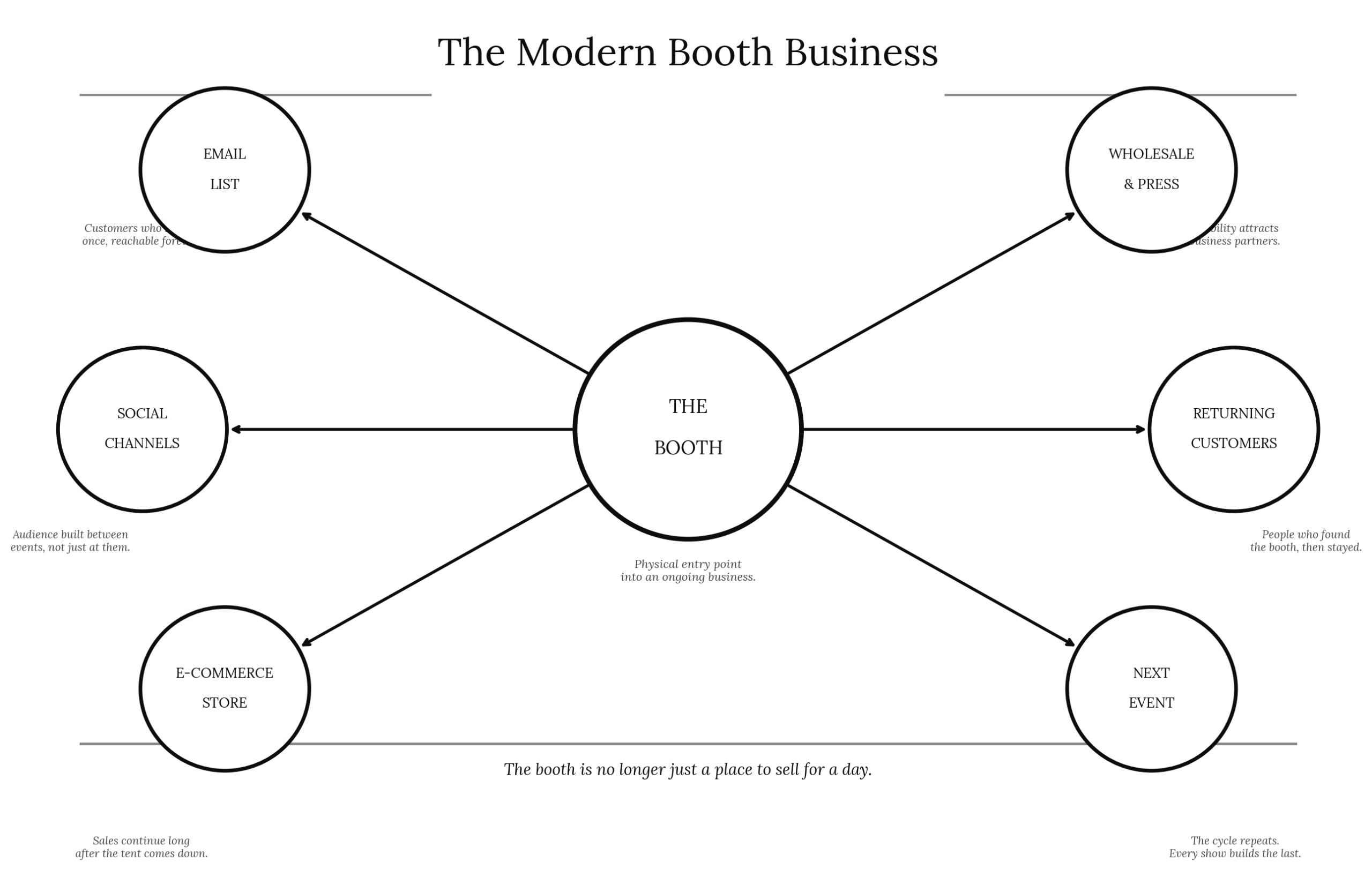
Not only are successful boothers deploying visual merchandising and branding strategies once associated with permanent stores — they’re operating with fully developed marketing ecosystems that extend before and after the event. Email lists. Social channels. E-commerce platforms. The booth is no longer just a place to sell for a day. It’s a physical entry point into an ongoing business.
Portable digital displays, mobile payment systems, and QR-driven engagement are now common at events of every size. What the public might see as a couple selling baby booties and blankets may, if they’re swiping enough credit cards, be studied closely by marketing professionals looking for techniques to bring back to their own operations.
Brick-and-mortar managers can learn more from boothers than just how to pitch and fold a tent. Booths operate in environments where attention is scarce, messages must work from a distance, and visitors are overwhelmed with competing stimuli. The feedback loop is immediate and unforgiving. That’s not a bug in the format — it’s the entire education.
The booth used to be a smaller version of retail. Increasingly, retail is becoming a larger version of the booth.