BoothEconomy · September 11, 2026
Search “vendor canopy buying guide” and you’ll get buried in advice. Most, if not all of it, will be from companies trying to sell you their tents. Some will tell you to buy the sturdiest tent you can afford, or they might say, “go commercial-grade.” That’s not bad advice for any vendor. It’s just not the whole picture.
With this guide, however, we’re just here to walk you through what to think about when purchasing a tent, and then your practical and emotional sides can have at it. But when it’s time to pull out your credit card, your gut makes the final call.

What You Need
Strip away the marketing, and there are a few things every vendor canopy has to do. It has to go up and come down. It has to be carted from here to there and back again. It needs to be stored between events. It needs to keep sun and light rain off your table. It needs to survive a normal season of setup and teardown, and fit the space you’ve been assigned. That last one is easy — 10×10 feet is the standard booth size at the overwhelming majority of craft fairs, farmers’ markets, and festivals. Unless an event has specifically told you otherwise, that’s the size to buy.
Beyond that, the floor is lower than most guides admit. You don’t need a hexagonal-leg frame or 600-denier fabric to get through your first season. You need something that opens, closes, and doesn’t fail on you mid-show.
The Honest Gut-Check
If you live in Miami and you’re flying up to visit family in Minnesota for the holidays, you don’t need to buy the arctic-grade expedition parka your folks wear every day from Thanksgiving to Easter. That coat is built for someone who’s out in it daily, all winter. You’re there for a week.

But, that doesn’t mean you show up in a teeshirt. You bring layers — a real coat, gloves, maybe a warmer hat than you’d wear at home. You solve the problem without buying gear built for a life you don’t live.
The same logic applies to your canopy. If you’re doing three or four shows a year, you likely don’t need the 55-pound commercial-grade frame built for someone doing thirty shows a year. A lighter, less expensive tent — reinforced with a few cheap additions — solves your actual problem without you paying for durability you’ll never test. Weights matter more than most first-time buyers expect: 25 pounds per leg is the bare minimum vendors report getting away with, 40 pounds per leg is the real-world norm, and that climbs to 50-75+ pounds per leg once wind picks up past 30 mph. Attach the weights to the frame, not the legs, and a cheap tarp for surprise rain rounds out the list.
If that’s genuinely where you are, the minimum is enough. That’s not settling — it’s the correct call for your situation.
Where “Want” Enters — And Why It’s Rational
For everyone else, here’s where spending more starts to make sense: cost per use. A $150 tent that fails at your sixth show has cost you more per event than a $500 tent that lasts eighty shows. The math flips depending entirely on how often you’re setting up.
Talk to enough vendors who’ve been doing this a while, and you’ll hear a version of the same story: they replaced their tents three or four times before landing on the one that finally held up. That’s an expensive way to learn. And most of those replacements weren’t due to wear catching up with them. They were storm-driven: a gust that a cheap frame couldn’t survive, and not a fabric that slowly wore out. The point of running the math up front — how many shows a year, how many years you expect to keep doing this — is to skip straight to the tier that fits, instead of learning it the expensive way.
What “Want” Buys You
Once the math justifies spending more, here’s what you’re actually paying for.
Frame material. Steel is heavier and cheaper, and it holds up fine in most conditions — a reasonable starter choice. Aluminum costs more, but runs 15 to 20 pounds lighter, won’t rust, and is easier to haul if you’re doing this solo. Worth the upgrade once you’re hitting double-digit events a year.
Setup ease. Not all tents in the same weight class go up the same way. Some, like Crown Shades’ CenterLOK, are built to lift out of the bag rather than drag out, which vendors reported makes solo setup meaningfully easier — even on a heavier frame. Worth checking specifically if you’re usually setting up alone, separate from weight or material.
Real, independent solo-setup comparison — if you’ll ever be pitching this tent alone, it’s worth two minutes of your time.
Fabric. Polyester is standard. Look for at least 300-denier fabric for basic durability; a PU coating adds water resistance, which matters more if you sell anything paper, textile, or food-based that a sudden drizzle can ruin.
Weight as a shortcut. If you don’t want to memorize spec sheets, tent weight is a decent proxy for how long it’ll last. Roughly: under 35 pounds is consumer-grade, good for a season of light use. 35 to 55 pounds is the intermediate range where most regular vendors land. 55 pounds and up is commercial-grade, built for the vendor who’s out there most weekends of the season.
Roof venting. A vented top lets wind pass through the canopy instead of catching it like a sail. This matters more than it sounds like it should — a solid, unvented top is exactly what turns a gust into a tent that’s suddenly airborne. If you’re buying for outdoor use, vented is worth seeking out over a flat sealed top.
Sidewalls included or sold separately. Some tents come as a full kit — frame, top, and sidewalls together. Others price the frame and top alone, and sidewalls show up as a $50-100 add-on you discover later. Worth checking before you compare two prices side by side; they might not actually be comparing the same thing.
None of this means bigger numbers are automatically better. It means matching the tier to your actual show schedule, not to what looks impressive next to someone else’s setup.
What This Actually Costs
Quick interruption — not a ranking, no “winner.” Just real canopies, grouped by what they cost, with the manufacturer’s own claims checked against what real vendors said when we went looking.
Under $300
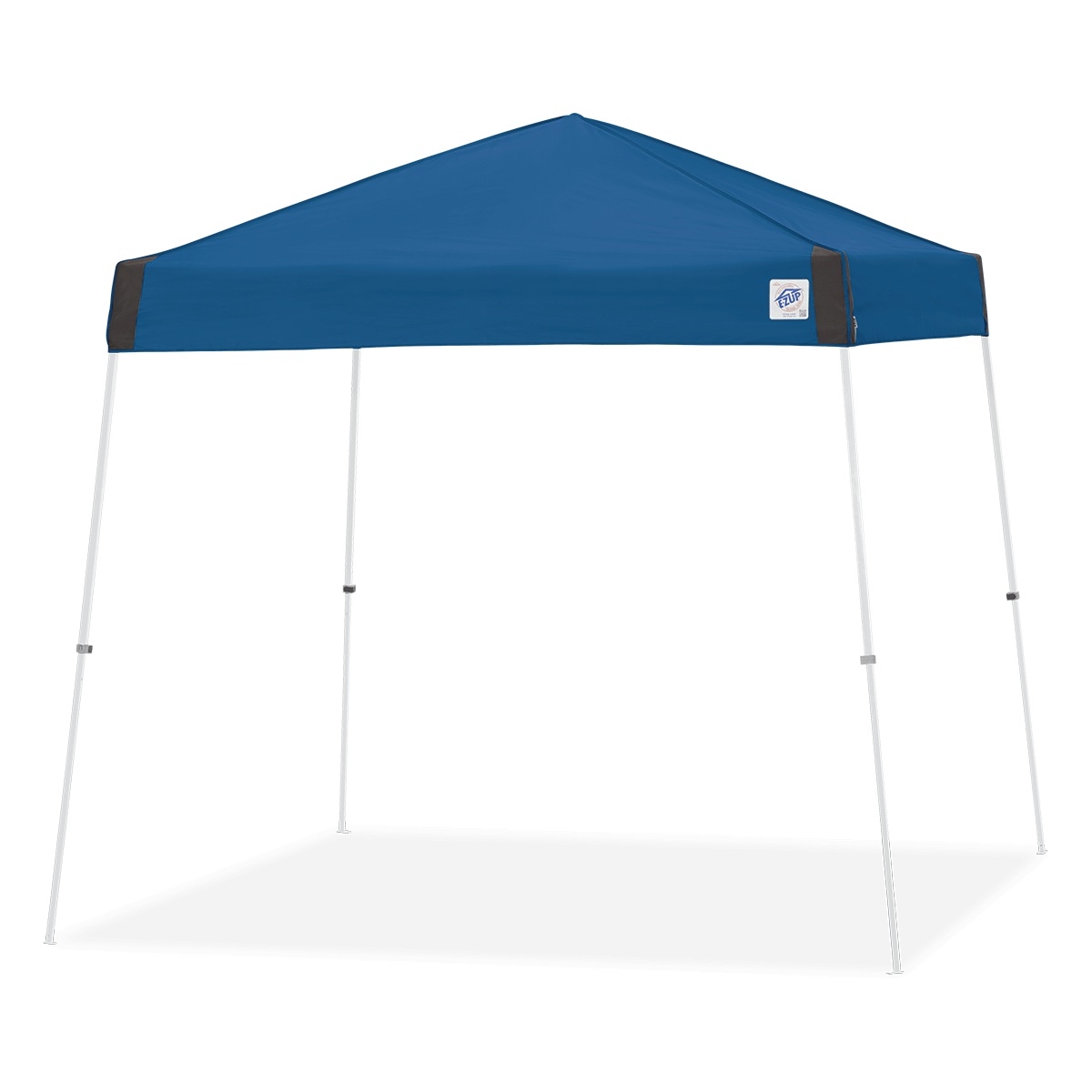
E-Z UP Vista
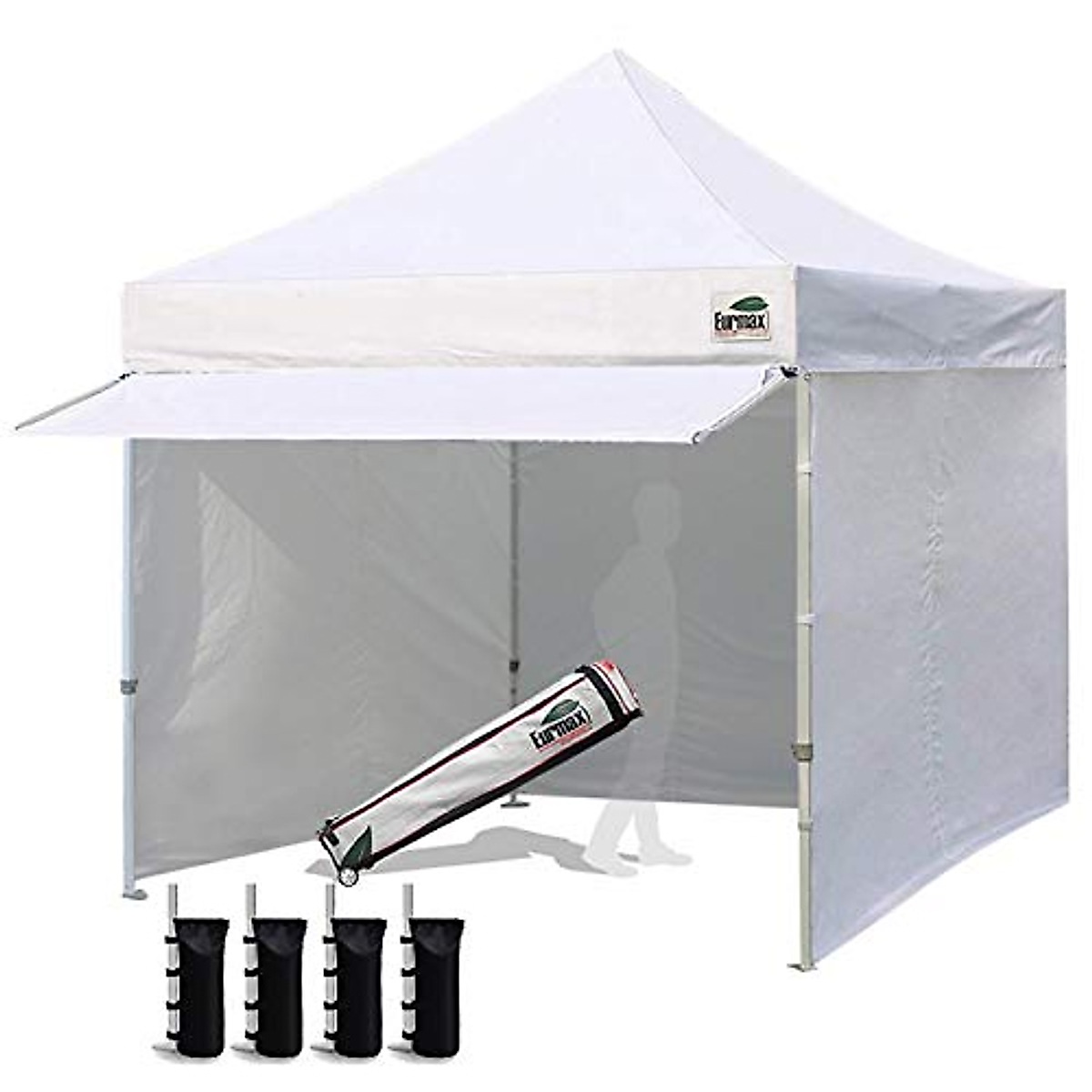
Eurmax (entry line)
$300 – $700
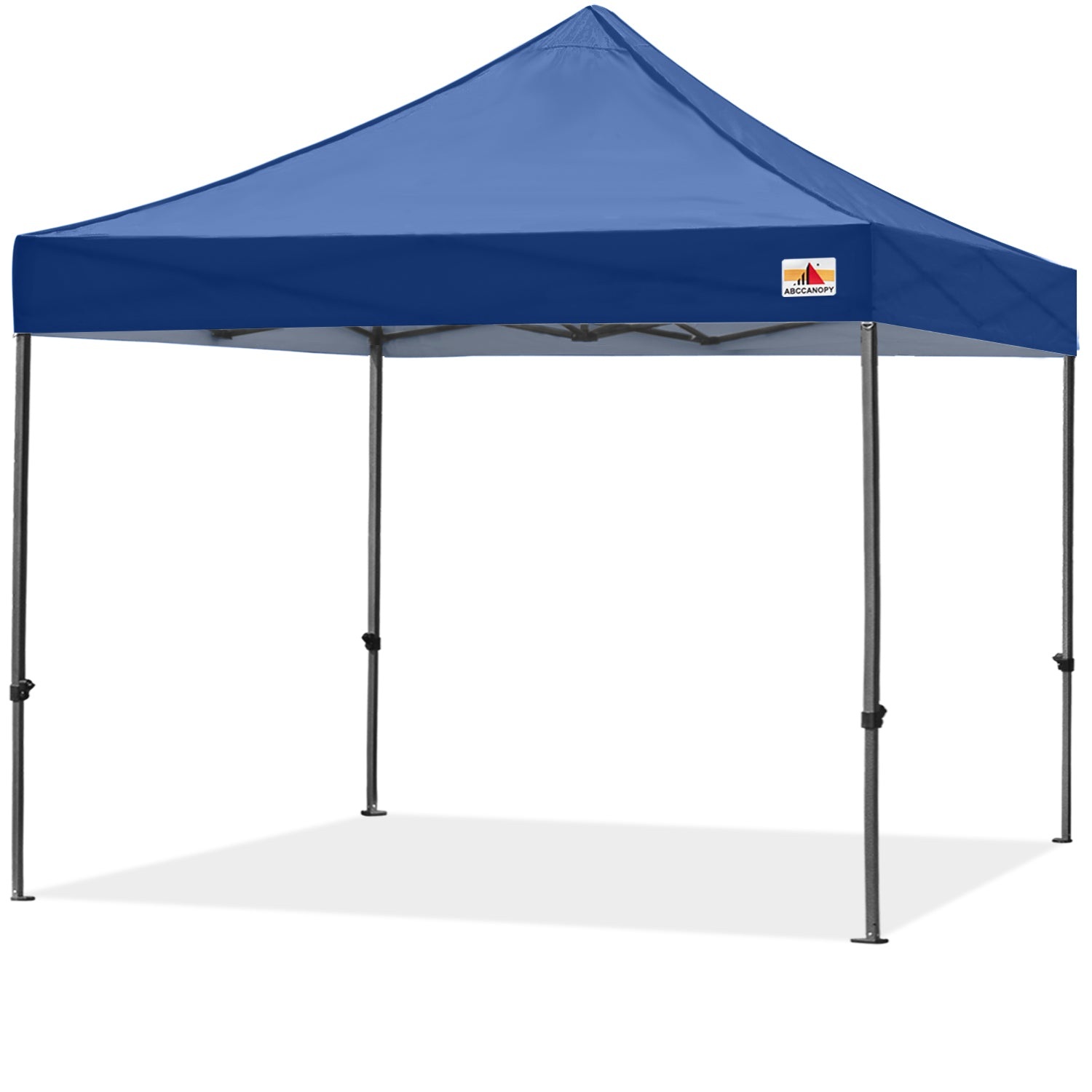
ABC Canopy (S1 Commercial)
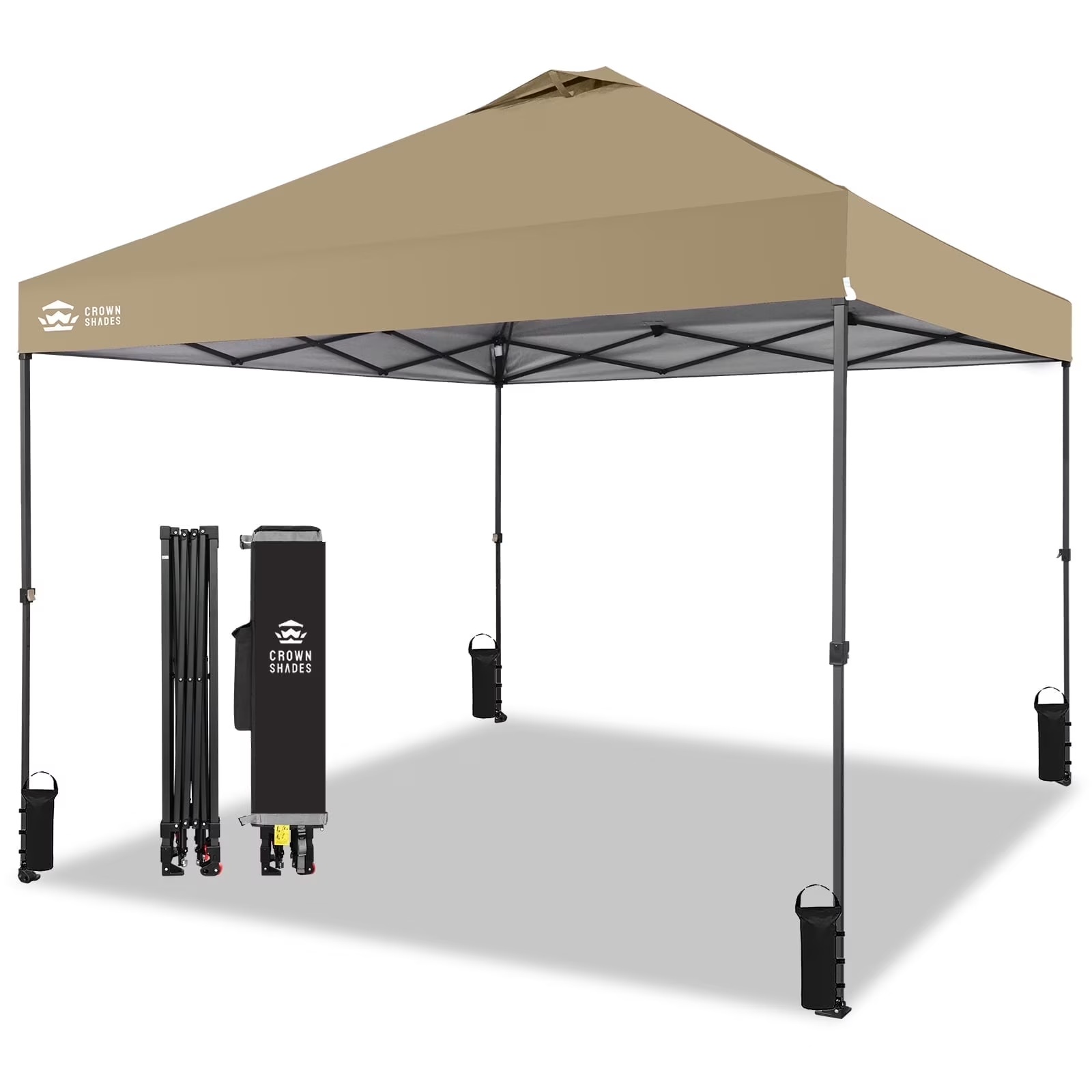
Crown Shades (CenterLOK)
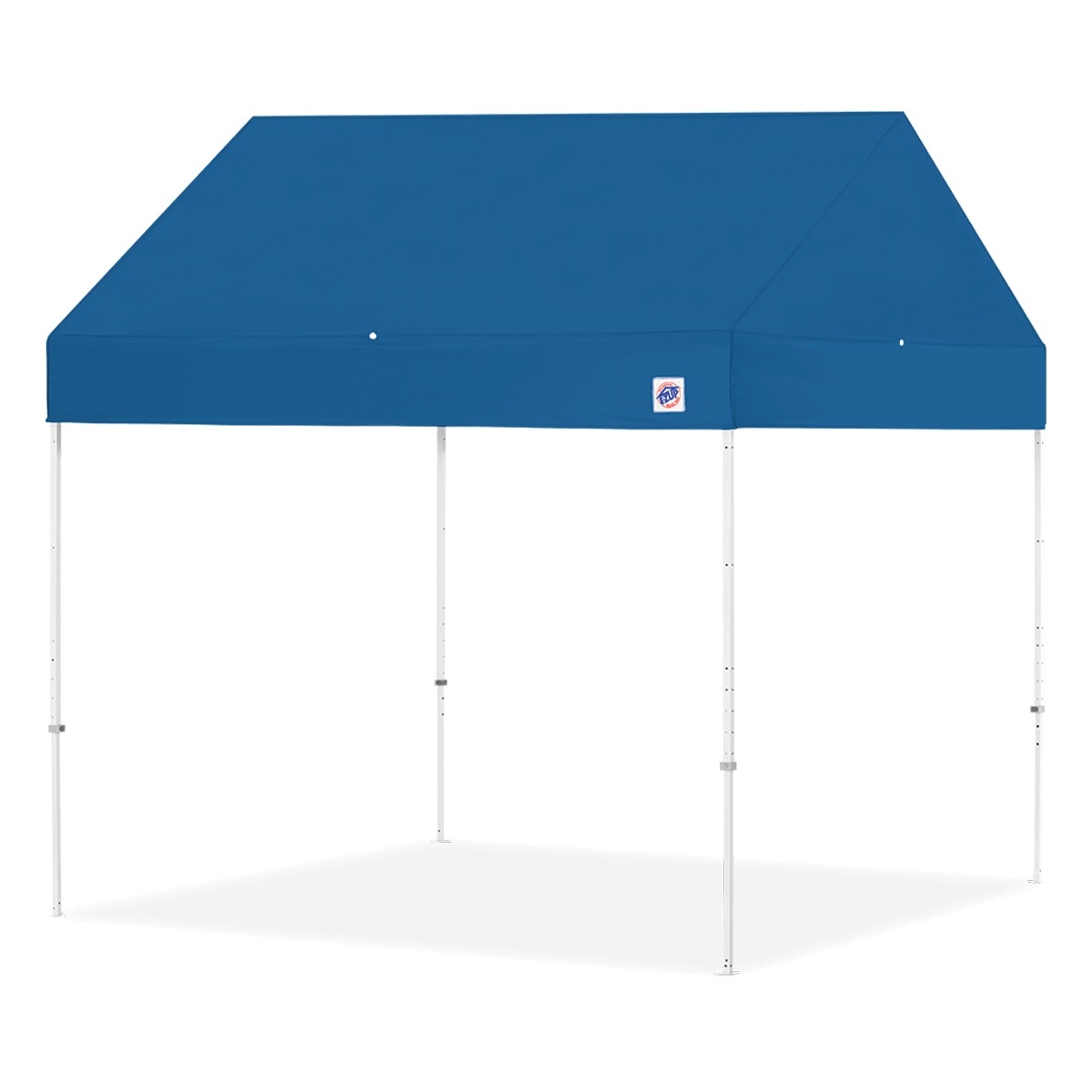
E-Z UP Eclipse
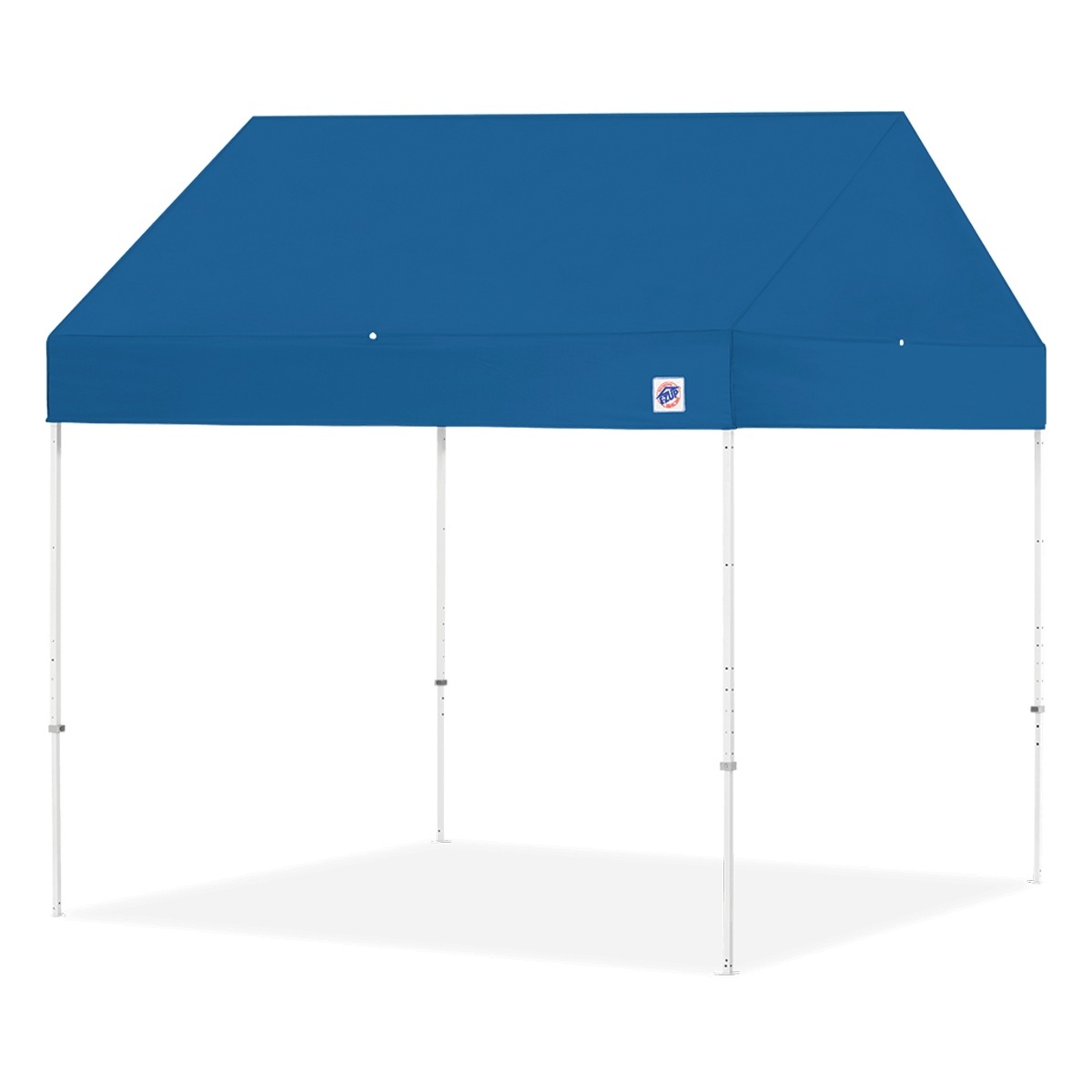
Impact Canopy
$700 – $1,200
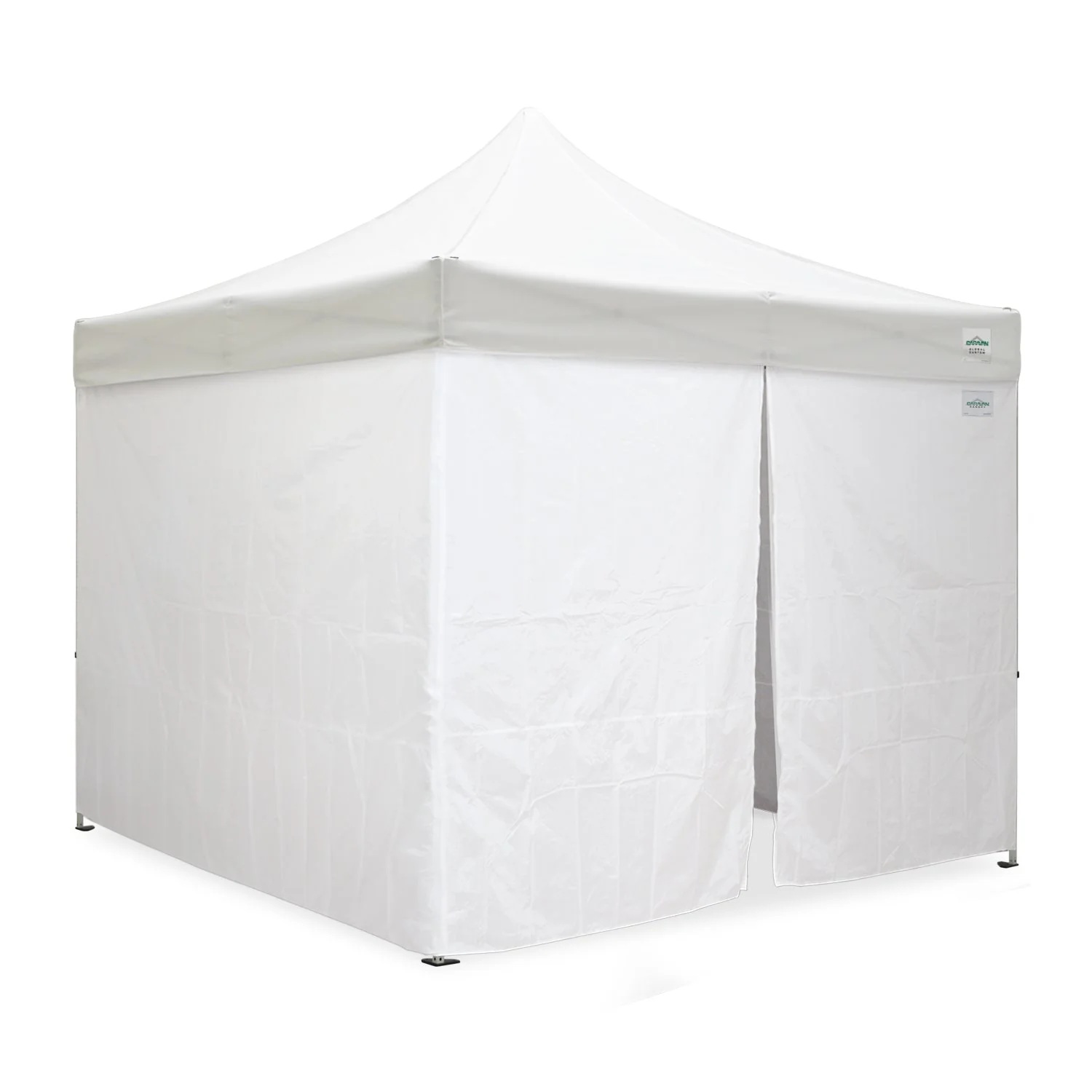
Caravan Canopy (Aluma)
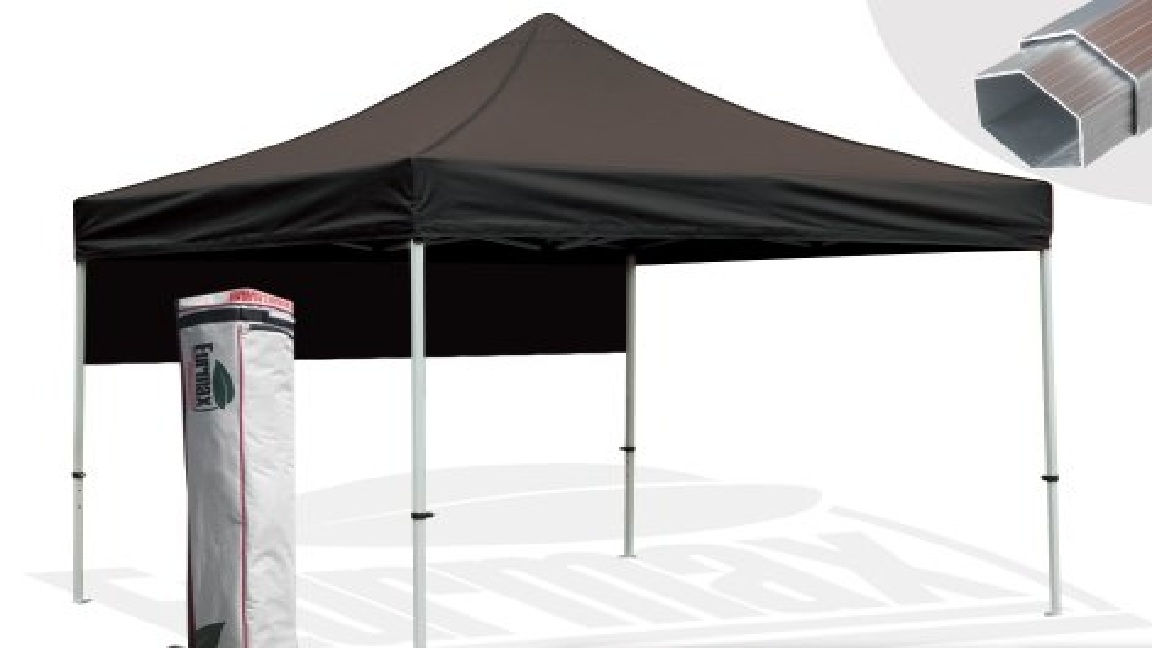
Eurmax Pro
$1,200+
This tier is a different world, and mostly a different audience: full-time touring fine artists doing high-end juried art fairs, where booth presentation itself is part of what gets judged. If that’s not your situation, you likely don’t need to be here — but it’s worth knowing this level exists.
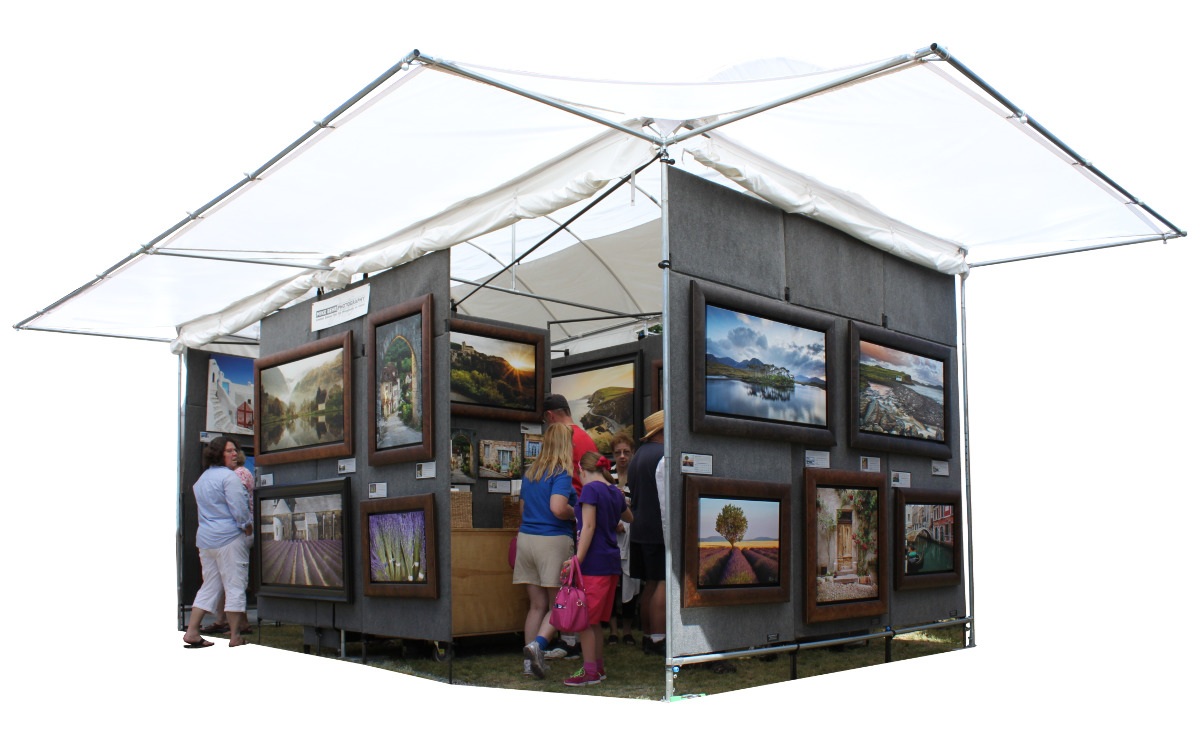
Trimline (by Flourish)
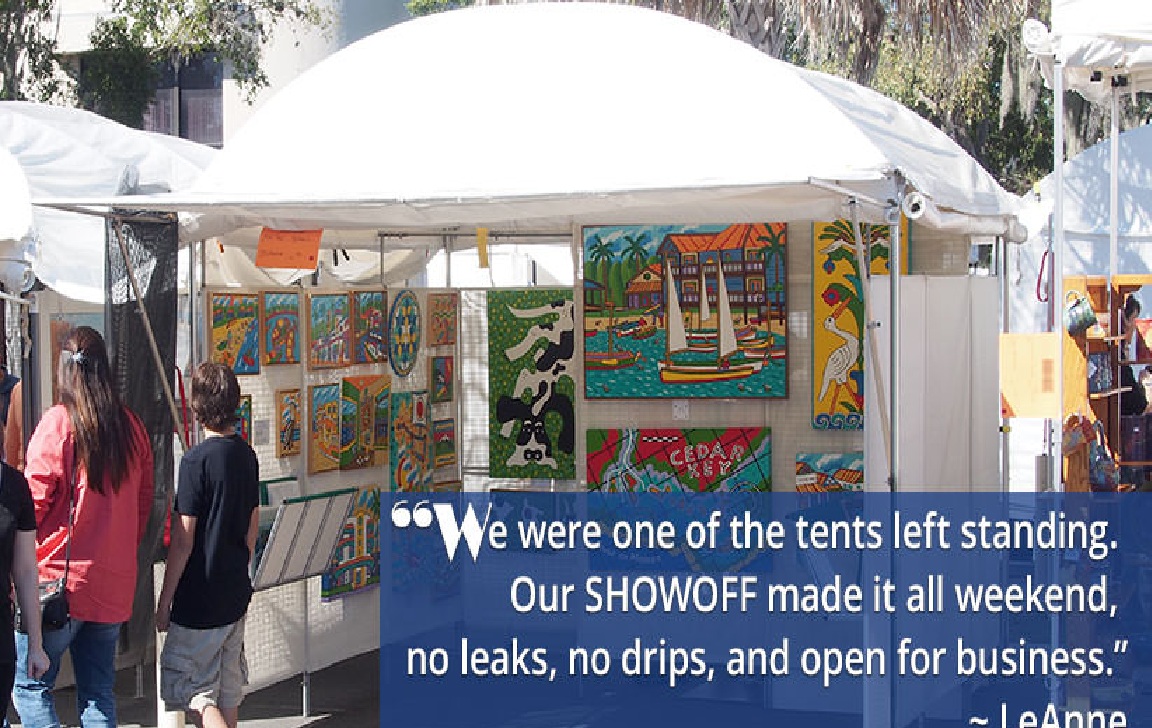
SHOWOFF and Light Dome
None of this is a ranking. Back to the framework.
You’re Sure You Don’t Need a White Top? This Section’s For You.
Farmers markets, community events, flea markets, and most open craft fairs won’t care what color your tent is. Juried art and craft shows, and some antiques shows, are different — many require a white canopy top, sometimes white sidewalls too. If you don’t currently apply to juried shows, it’s easy to shrug this off. Buying colored or printed now can quietly close that door later. Before you buy a tent with a colored top, check the rules for your events — even the ones you’re just thinking about.
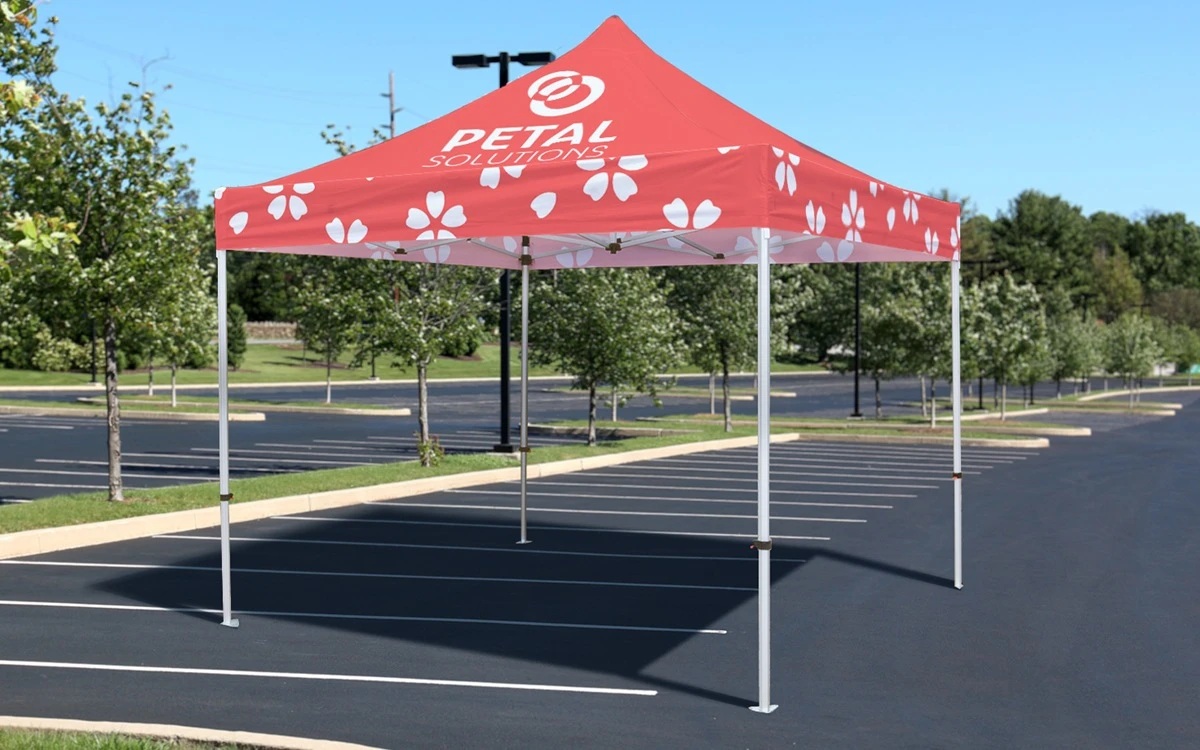
Imprinted canopies, Reader’s Digest version: most of the big names in custom canopies — ABC Canopy, MasterCanopy, TentCraft, and similar — are manufacturers who also do the printing in-house. The other option is a general promotional-print company — think BannerBuzz, BuildASign, or Vispronet — where canopies are one item in a much bigger catalog of banners, signage, and sometimes swag, and the tent itself is often made elsewhere behind the scenes. Then again, they’re probably buying hundreds of tents. So just because they don’t make the tents themselves doesn’t necessarily make them uncompetitive. Neither approach is wrong — it’s a question of whether you want a canopy specialist or a one-stop shop for everything with your logo on it.
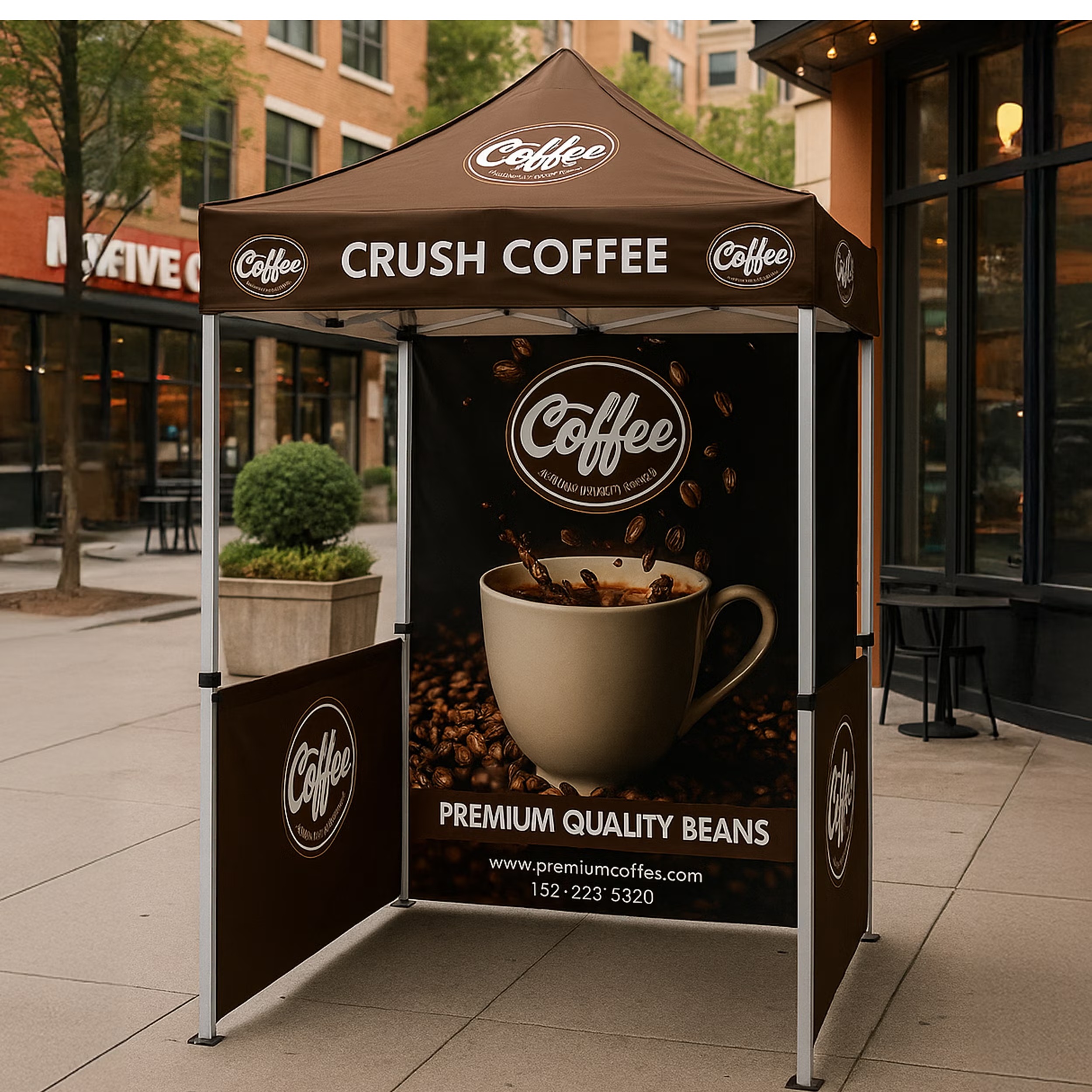

A quick word on AI-generated graphics, since it comes up a lot: fine for early concepts — logo ideas, color and layout mockups. Less fine as your final print file. Large-format canopy printing wants vector art (a format that scales up to tent size without going blurry), and most AI image tools output raster images, which don’t scale that way. Treat AI output as a starting point for a designer to clean up, not something you hand straight to a printer.
Plain Roof Doesn’t Have To Mean Dull Booth
A plain, unbranded canopy roof doesn’t mean a dull booth. This matcha vendor’s tent top is completely unprinted — but a hanging banner, clear signage, and a well-organized counter do all the visual heavy lifting. Proof that you don’t need a custom-printed tent to make your booth stand out.
A plain canopy top, dressed up with signage and setup — no custom printing required.
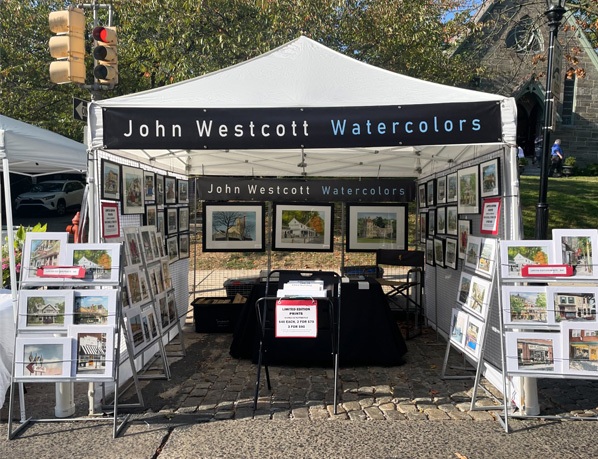
Signs and sign accessories. This is where a plain canopy top actually pays off — the budget you saved on printing can go straight into signage that does more work anyway. A-frame signs and travel easels are portable and don’t require the canopy itself to be branded. Floor-standing or countertop sign holders keep pricing, ingredient lists, or your story visible without cluttering the table.
If you’re shopping for pieces like this, Displays2Go’s craft fair section has a dedicated lineup of sign holders, banner stands, and tabletop signage built for exactly this kind of booth.
Your banner, or banners, are just the start of your under-the-roof merchandising. Take your messaging to the next level with these affordable, professional-looking sign holders.
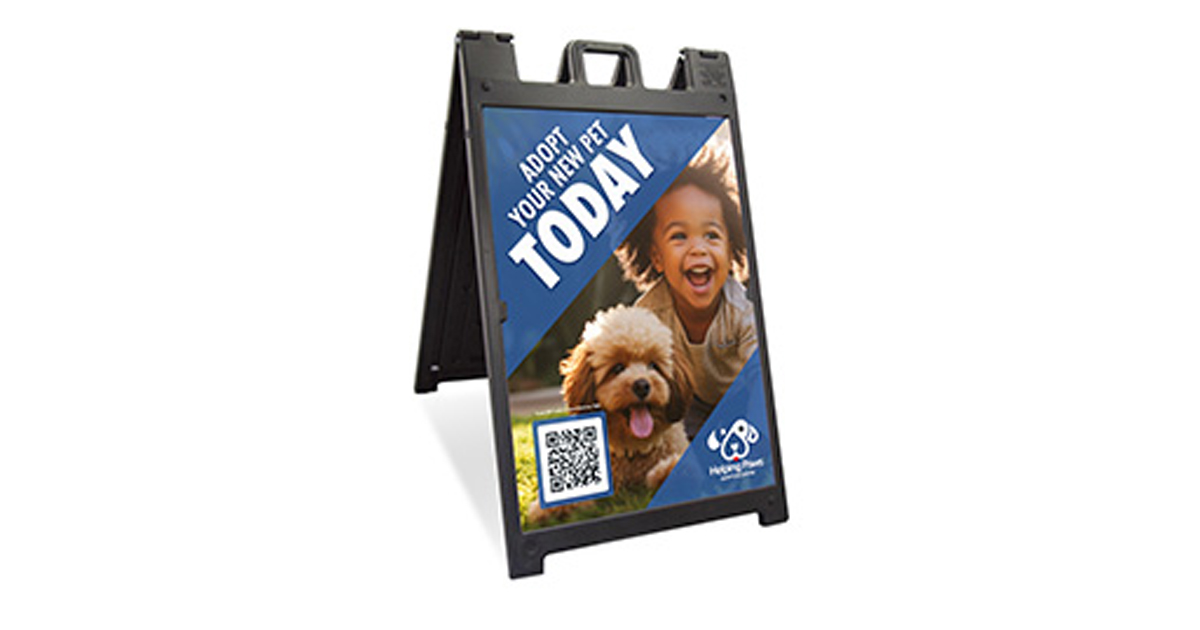
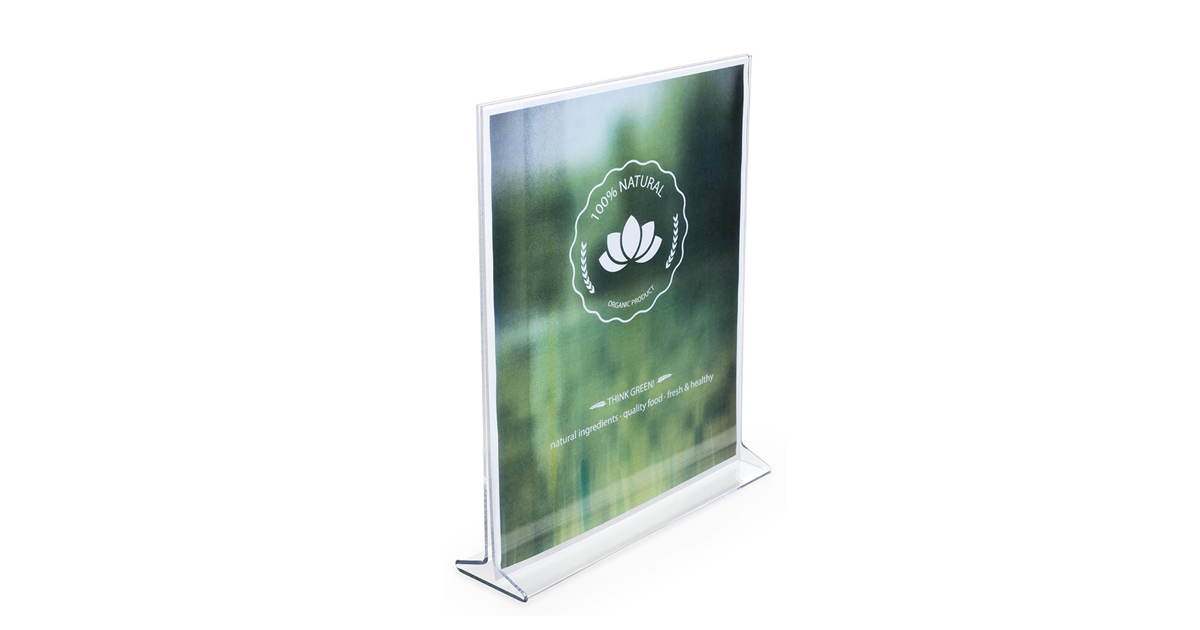
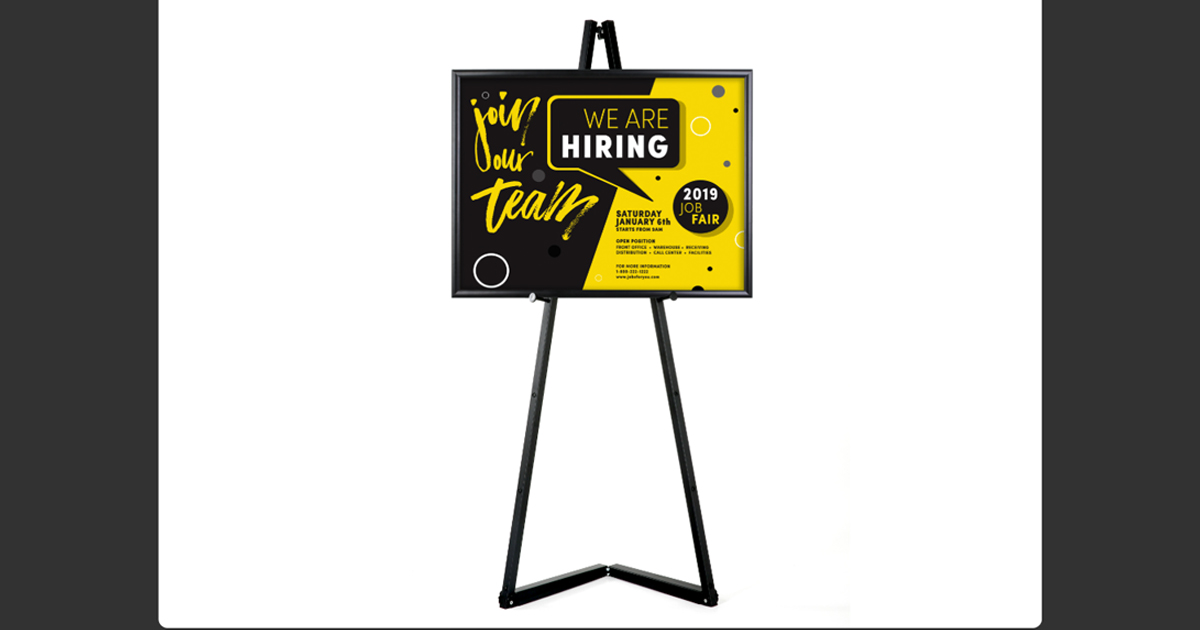
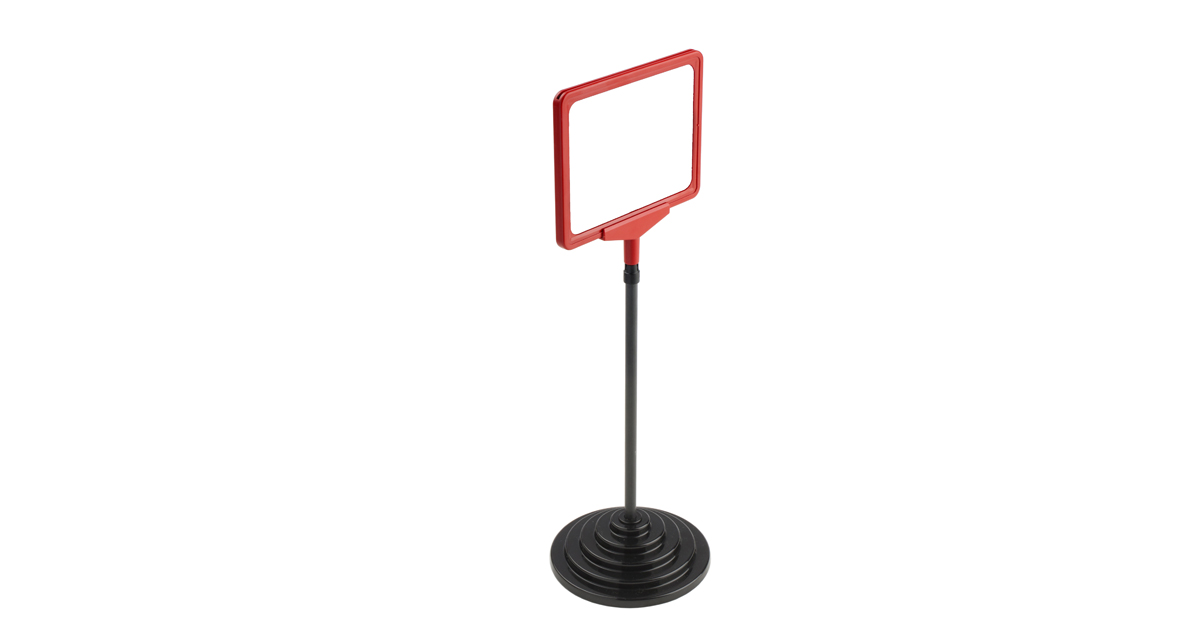

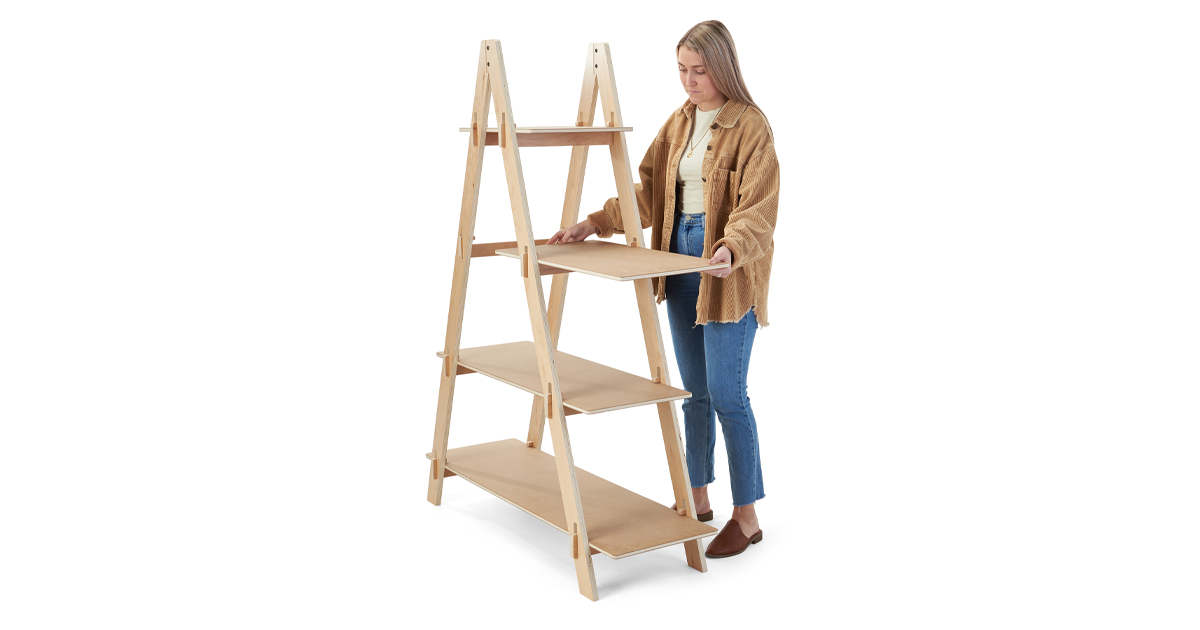
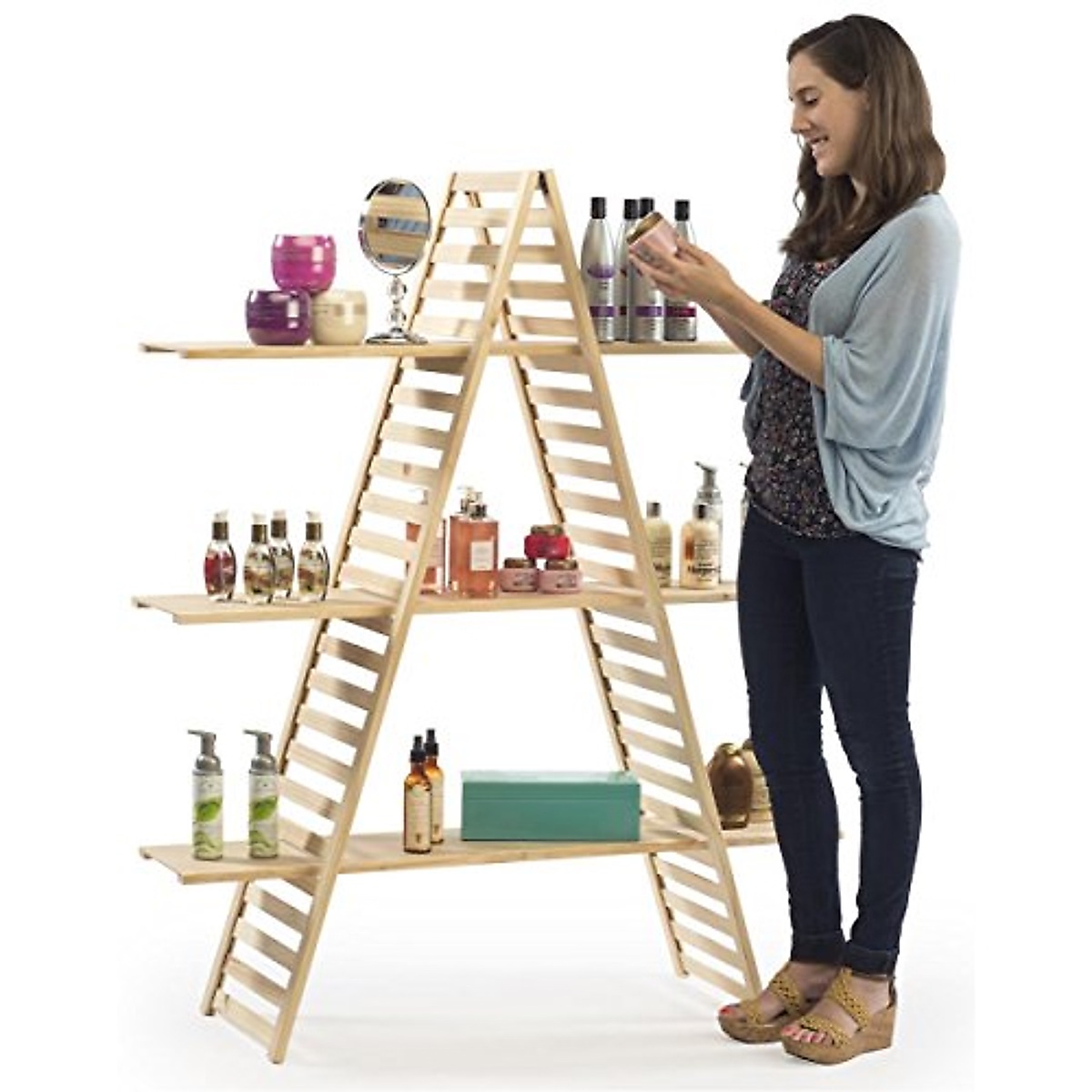
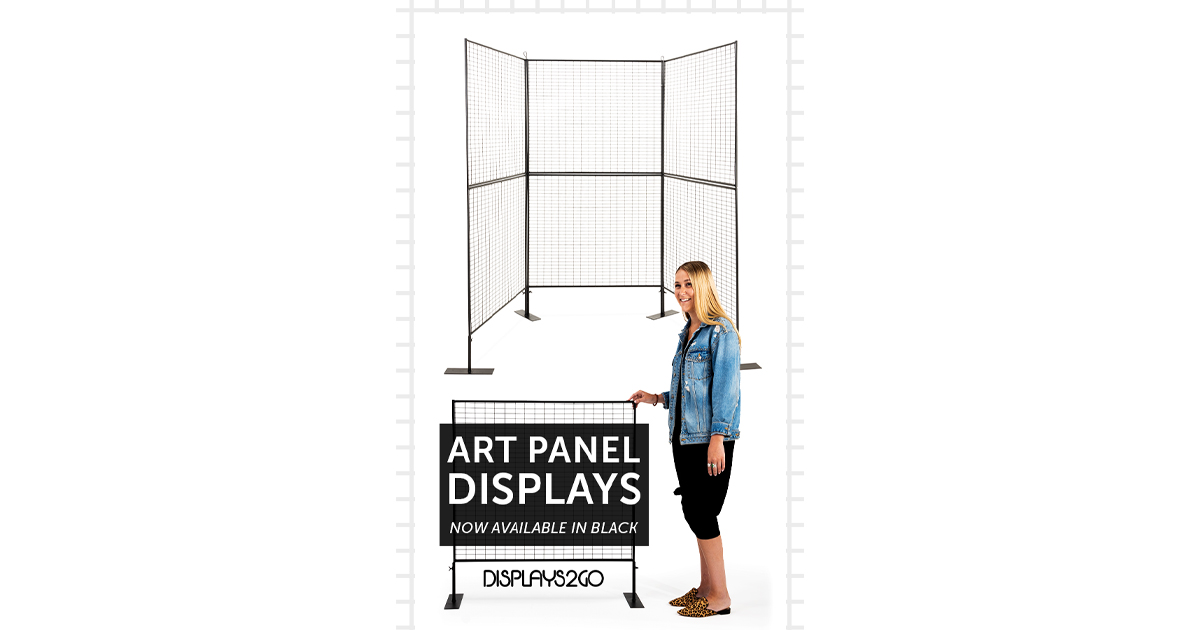
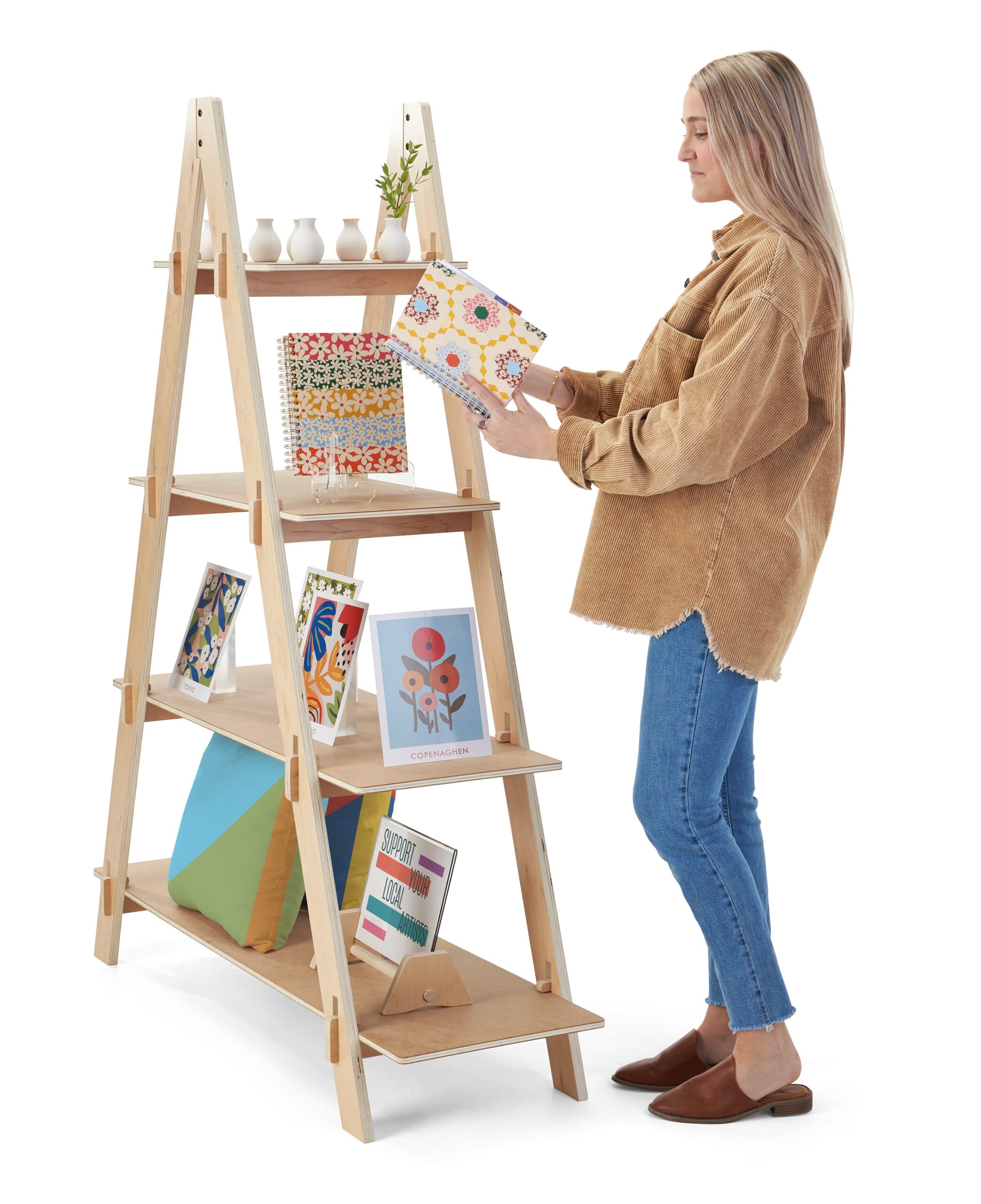
Craft fair displays and pop-up merchandising. Beyond the tent and the signage, a few well-chosen display pieces do a lot to make a booth feel finished. A-frame shelving breaks up a flat table, art grid panels give anyone selling prints or photography a proper way to hang work, and tiered risers turn a plain tablecloth into layered merchandising. None of it needs to be expensive or complicated to look professional.
Was That Helpful?
Let us know if you disagree (or feel free to agree) with anything we presented here, or if there’s anything huge we forgot. Email us at info@bootheconomy.com.
Leave a Reply