Event Marketer has named “miniaturized touchpoints” the experiential marketing trend of the week — which is another way of saying that major brands have started building booths.
The specific example is a pop-up activation at this year’s Stagecoach festival: the “Smallest Bar,” a hyper-compressed brand experience positioned just outside the festival grounds for three days. The format is deliberately small, deliberately local, deliberately temporary. It is, in other words, a booth.
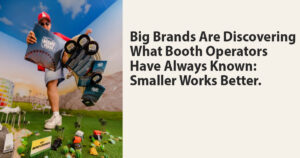
A companion piece in Forbes argues the underlying philosophy: people don’t want ads, and brands that understand this are shifting toward physical presences that “turn curiosity into presence.” The writer, a 20-year experiential marketing veteran, frames the pop-up not as a promotional tactic but as a replacement for traditional advertising — a way to create genuine engagement rather than purchased attention.
What neither piece acknowledges is that this is not a new insight. Craft fair vendors, farmers market operators, and food truck owners have been executing exactly this model for decades, not as a marketing strategy but as a business model. The small footprint, the local presence, the temporary engagement, the direct relationship with the customer — these are the operating conditions of the booth economy, not a trend that Fortune 500 companies invented.
What’s new is that brands with large budgets are now treating the booth format as aspirational rather than marginal. That changes the competitive environment for independent operators in ways that are still playing out — more professional booth setups, higher production values at festivals, more corporate presence in spaces that used to be dominated by independent vendors.
The booth economy spent decades being overlooked by big brands. Now that they’ve noticed it, the question is what they’re going to do to it.
Source: Event Marketer