The Montrose food truck lot at Westheimer is being displaced by a 31-story residential tower — a story about land value, vendor precarity, and what cities lose when surface lots become vertical ones.
The lot has been a food truck gathering point in one of Houston’s most active commercial and residential neighborhoods. Its replacement by a high-rise called the Starling is not surprising — the economics of surface-level food truck lots in dense urban neighborhoods rarely survive sustained real estate pressure. What makes it worth noting is how clearly it illustrates the structural position of outdoor vendor spaces in the urban economy.
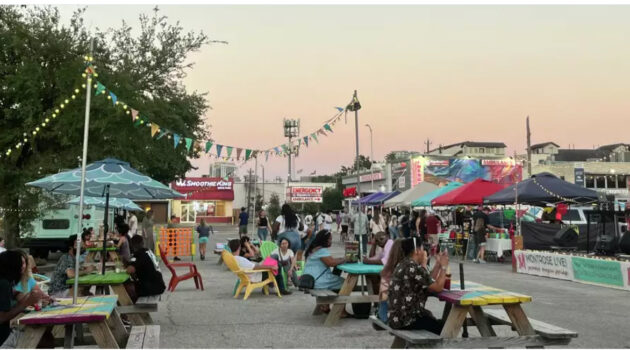
Food truck lots, farmers markets in parking lots, pop-up markets on vacant parcels — these operate on land that someone else owns and values for something else. The vendor ecosystem gets access to the land because, temporarily, a food truck lot is more economically productive than an empty lot. When that calculus changes, the vendors go.
There’s no lease that protects a food truck lot from a development decision. The vendors who built customer bases around the Montrose location — some of them likely for years — have no claim on the site and no recourse against the decision to redevelop it. They move, or they stop operating.
This is the foundational vulnerability of any outdoor vendor economy built on someone else’s land: the business is portable, but the customer base isn’t. When the lot goes, so does the foot traffic pattern, the neighborhood association, and the lunch crowd that took years to build.
The booth economy is mobile by design, but its customers are not — and that asymmetry is what displacement actually costs.
Source: Houston Chronicle