That food truck didn’t come off the assembly line like that.
Before it became a mobile kitchen/restaurant, it was just a truck — or a trailer — and it started life looking a lot more ordinary than the finished product you see parked at a festival, on a city street.
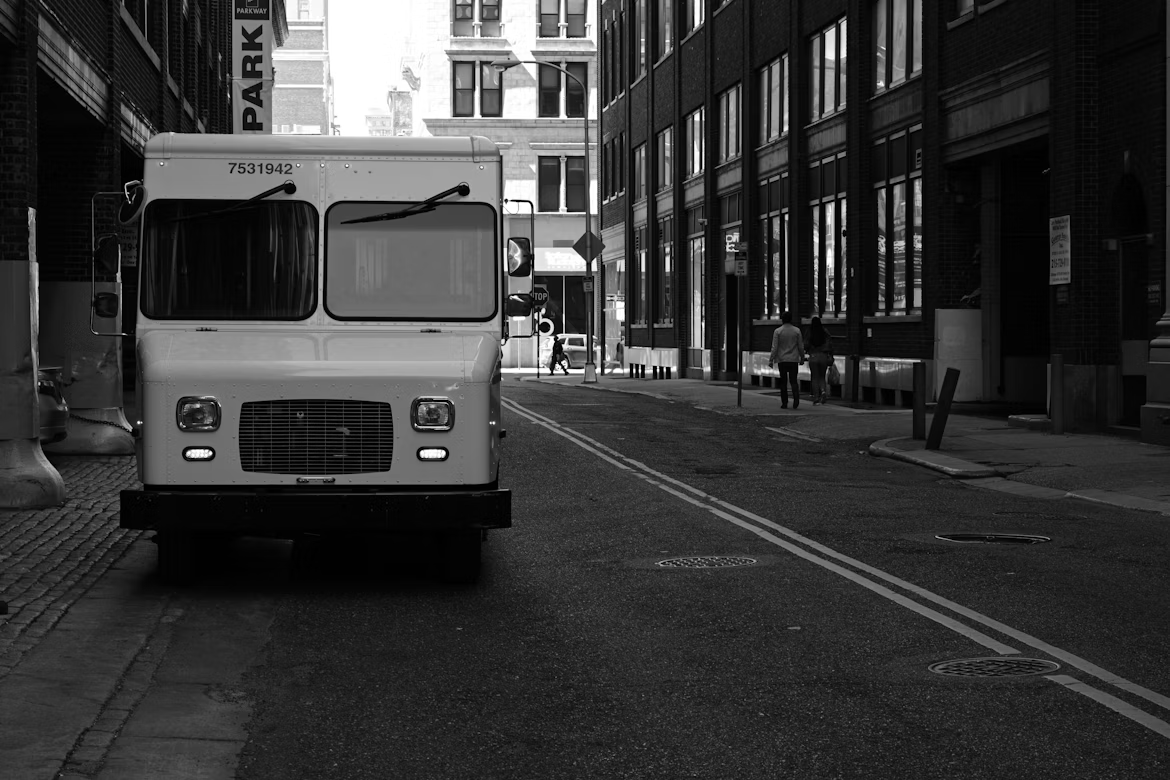
Before it becomes a food truck, it’s just a vehicle—everything else gets built onto it.
New vs. Used
If you thought buying your last new car was a workout, think about how much simpler that process was than buying a food truck.
A car is one product. A food truck is really two: a vehicle and a mobile kitchen/restaurant.
Once someone decides to take the plunge, the first real decision is simple:
New or used.
That decision is heavily shaped by price.
A used truck might fall somewhere in the $30,000 to $100,000 range. A new or custom truck can easily run from $100,000 to $200,000 or more, depending on size, equipment, and build quality.
That’s one reason most first-time food truck operators start by buying someone else’s truck.
Not because it’s ideal. Because it’s the fastest, cheapest way to find out if this business works.
The reasons are straightforward. It’s less expensive, it’s faster, and it lowers the risk. You can be up and running in weeks instead of months, and you’re not committing six figures to a concept you haven’t tested yet.
Most first-time truck owners aren’t entirely sure what they need. Layout, equipment, workflow — those are things they learn by doing. A used truck lets an operator get in the game, make mistakes, and figure it out without overcommitting.
Some operators learn the hard way that the business isn’t for them — but it’s a less expensive lesson with a used truck.
This is not to say that used trucks don’t come with risks. Hidden mechanical problems, aging equipment, old wiring, patched-together systems, or a layout that made sense for someone else’s menu can all come with the territory.
There are marketplace sites and dealer listings, but a surprising number of food trucks change hands through word-of-mouth. Someone is upgrading, or someone is getting out. Word gets around.
That leads to an interesting pattern.
Second-time buyers are much more likely to go new.
By the time someone is ready for a second truck, they’re not guessing anymore. They know their menu, they understand their workflow, and they’ve lived with the limitations of their first build. They know what slowed them down, what they wish they had, and what they’d never do again.
The first truck teaches you the business. The second truck reflects what you learned.
That often means a better layout, the right equipment in the right place, better flow, and fewer compromises. It also usually means more capital and more confidence to invest it.
The Big Decision for New Truck Buyers: Stock or Custom?
Once the concept is proven, new doesn’t mean one thing. It means a second, more important decision:
Stock or custom.
Buy a truck that’s already been designed, or build one around your exact specs.
Both are “new.” But they’re completely different experiences—and they lead to very different results.
Stock (Turnkey)
The truck is already designed, already built, and in some cases already sitting in inventory. You’re not starting from scratch — you’re choosing from what exists.
Stock doesn’t always mean bare-bones. There can still be options: different sizes, different layouts, different equipment packages, different service-window arrangements, and different branding treatments. But the basic idea is the same. The blueprint already exists.
Stock trucks exist because most operators don’t need a perfect layout. They need a workable one, fast. They need something that works on day one.
This is what buying looks like.
What to notice:
- Finished truck
- Fixed layout
- Feature-driven language
You’re not really designing a truck. You’re deciding whether this one works for you.
Custom Build
This is a different experience entirely.
Instead of choosing from finished inventory, you’re working backward from your menu, your workflow, and how you want to operate.
That means more decisions, but it also means more control: equipment placement, prep flow, storage, ventilation, power, service windows, water systems, and all the details that determine whether the truck works smoothly on a busy day or becomes a rolling frustration.
Custom builds exist because once you know your operation, small inefficiencies turn into real money.
This is what building looks like.
What to notice:
- Layout decisions
- Equipment tied to menu
- Process-focused explanation
Now you’re not shopping. You’re building.
It usually takes longer. It usually costs more. But it also gives the buyer a chance to correct everything the first truck got wrong.
Every Food Truck Has a Backstory
Some started as somebody’s first, cautious try.
Some started as a polished second act.
Some were bought ready to go.
Some were built around a very specific vision.
But none of them came off the assembly line as food trucks.
Before it was a food truck, it was just a truck — and someone made a series of decisions that turned it into a business.